Commercial Roof Replacement in Roanoke
Tear-Off and Full Roof Replacement for Roanoke Buildings
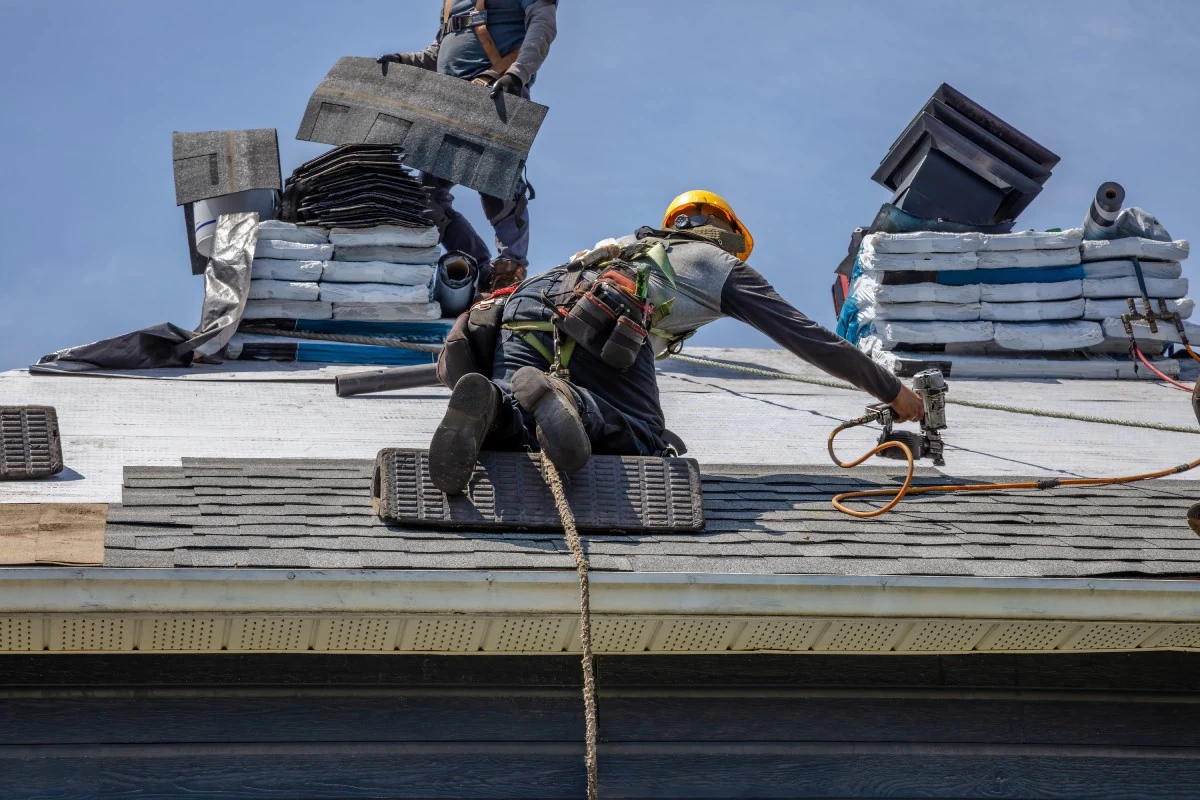
The replacement plan explains tear-off or recover assumptions, insulation and drainage needs, occupied-building phasing, system options, and closeout requirements. Tear-off and replacement means stripping the existing roof down to deck and rebuilding the assembly from that point up. It's the most disruptive roof work a building goes through, and it's also the only way to fix problems that live below the membrane - soaked insulation, corroded deck, or a slope that was never right to begin with. We plan replacement projects around getting your building weathertight again as fast as the sequencing allows.
When Tear-Off Beats a Recover
A recover - installing a new membrane over the old one - only works if what's underneath is dry and structurally sound. On a lot of the older manufacturing and warehouse buildings around the rail corridor and the industrial blocks off Shenandoah Avenue, that's not the case. Decades of minor leaks have left insulation waterlogged in patches, and covering that over just traps the problem. Tear-off is the honest answer once a moisture survey shows saturation beyond isolated spots.
We also push toward tear-off when a roof has multiple membrane layers already stacked from prior recover jobs - code and weight limits cap how many layers a deck can carry, and buildings that have been recovered twice are usually out of room.
Disposal and Deck Prep
Tear-off generates a lot of debris, and how it's staged matters on a working site. We coordinate dumpster placement and loading routes around active dock doors and parking, which is a real constraint on tighter urban sites downtown and around the medical campus, where truck access competes with deliveries and patient traffic.
Once the old roof is stripped, we inspect the exposed deck directly rather than assuming it's fine. Steel deck near the rail yards sometimes shows corrosion from decades of condensation cycling; older wood plank decks on some of the pre-war commercial buildings downtown need individual board assessment. Any deck repair happens before a single board of new insulation goes down.
Multi-Layer Tear-Off Complications
Some of the pre-war commercial buildings downtown and along the older industrial blocks have been reroofed multiple times without a proper tear-off, leaving two or even three membrane systems stacked on the original deck. Removing that requires more labor and disposal capacity than a single-layer tear-off, and it also means we don't know what condition the original deck is in until every layer comes off. We scope multi-layer tear-offs with contingency built in, since the surprises tend to show up only once the last layer is gone.
This is also where asbestos-containing materials sometimes turn up on buildings old enough to predate modern roofing material regulations. We flag that possibility upfront on any building constructed before the 1980s and coordinate testing before tear-off begins if there's reasonable cause for concern.
- Full membrane and insulation strip-out with same-day disposal staging
- Deck inspection and repair before new insulation installation
- Tapered insulation design where the old roof had chronic ponding
- New membrane system fastened for site-specific wind exposure
- Flashing and edge-metal replacement at parapets and penetrations
- Final inspection walk with owner before crews demobilize
Sequencing Around Weather
The valley's weather swings are the biggest scheduling variable on a tear-off. A summer afternoon storm building over the ridges can turn a dry morning into a race to get a section dried in, and winter tear-offs have to work around the cold snaps that come through fast enough to freeze standing water on an open deck. We track short-range forecasts daily during active tear-off phases and never leave more deck open overnight than we can protect if conditions turn.
Matching the System to the Building
Replacement is a chance to correct choices made decades ago. A distribution building near the I-81 corridor with heavy rooftop unit loading gets a fastening pattern and membrane thickness sized to that load, not whatever was standard when the building went up in the 1980s. A building on higher ground near the ridgelines that sees stronger sustained wind gets uplift-rated fastening to match, rather than the lighter pattern that might be fine on a sheltered valley-floor site.
Warranty and Documentation
Manufacturer warranties on a full tear-off and replacement are typically stronger than what's available on a recover, because the installer has full control of the assembly from deck up. We document deck condition, insulation R-value, and fastening pattern at each stage so the paperwork supports the warranty claim if anything comes up years down the road.
Frequently Asked Questions
How do you know if a recover isn't an option?
A moisture survey with core cuts tells us. If saturation shows up beyond a few isolated spots, or if the roof already has multiple membrane layers stacked from past recovers, tear-off is the only sound path forward.
What happens if you find deck damage after tear-off starts?
We stop and assess before installing anything new. Deck repair or replacement happens as its own step, priced and scoped once we can see the actual condition rather than guessing from the surface.
How disruptive is this to daily operations?
Tear-off is noisier and more visible than a recover, but we still section the work so occupied space stays covered and dry each night. We coordinate loud phases and debris hauling around your operating schedule where the site allows it.
Does replacement cost more than repeated repairs?
Often it costs less over a multi-year horizon, since repeated emergency repairs on a failing roof add up and don't fix the underlying saturation. We'll walk through the moisture survey findings so the comparison is based on your actual roof, not a general rule.
Can you match the new roof to existing rooftop equipment?
Yes. We field-verify curb heights, unit weights, and penetration locations before ordering materials, so flashing and support details are built for the equipment that's actually up there.
Ready to review the roof scope?
Request a Roof Assessment
Commercial Roof Replacement Planning in Roanoke
The replacement plan explains tear-off or recover assumptions, insulation and drainage needs, occupied-building phasing, system options, and closeout requirements. Tear-off and replacement means stripping the existing roof down to deck and rebuilding the assembly from that point up. It's the most disruptive roof work a building goes through, and it's also the only way to fix problems that live below the membrane - soaked insulation, corroded deck, or a slope that was never right to begin with. We plan replacement projects around getting your building weathertight again as fast as the sequencing allows.
When Tear-Off Beats a Recover
A recover - installing a new membrane over the old one - only works if what's underneath is dry and structurally sound. On a lot of the older manufacturing and warehouse buildings around the rail corridor and the industrial blocks off Shenandoah Avenue, that's not the case. Decades of minor leaks have left insulation waterlogged in patches, and covering that over just traps the problem. Tear-off is the honest answer once a moisture survey shows saturation beyond isolated spots.
We also push toward tear-off when a roof has multiple membrane layers already stacked from prior recover jobs - code and weight limits cap how many layers a deck can carry, and buildings that have been recovered twice are usually out of room.
Disposal and Deck Prep
Tear-off generates a lot of debris, and how it's staged matters on a working site. We coordinate dumpster placement and loading routes around active dock doors and parking, which is a real constraint on tighter urban sites downtown and around the medical campus, where truck access competes with deliveries and patient traffic.
Once the old roof is stripped, we inspect the exposed deck directly rather than assuming it's fine. Steel deck near the rail yards sometimes shows corrosion from decades of condensation cycling; older wood plank decks on some of the pre-war commercial buildings downtown need individual board assessment. Any deck repair happens before a single board of new insulation goes down.
Multi-Layer Tear-Off Complications
Some of the pre-war commercial buildings downtown and along the older industrial blocks have been reroofed multiple times without a proper tear-off, leaving two or even three membrane systems stacked on the original deck. Removing that requires more labor and disposal capacity than a single-layer tear-off, and it also means we don't know what condition the original deck is in until every layer comes off. We scope multi-layer tear-offs with contingency built in, since the surprises tend to show up only once the last layer is gone.
This is also where asbestos-containing materials sometimes turn up on buildings old enough to predate modern roofing material regulations. We flag that possibility upfront on any building constructed before the 1980s and coordinate testing before tear-off begins if there's reasonable cause for concern.
- Full membrane and insulation strip-out with same-day disposal staging
- Deck inspection and repair before new insulation installation
- Tapered insulation design where the old roof had chronic ponding
- New membrane system fastened for site-specific wind exposure
- Flashing and edge-metal replacement at parapets and penetrations
- Final inspection walk with owner before crews demobilize
Sequencing Around Weather
The valley's weather swings are the biggest scheduling variable on a tear-off. A summer afternoon storm building over the ridges can turn a dry morning into a race to get a section dried in, and winter tear-offs have to work around the cold snaps that come through fast enough to freeze standing water on an open deck. We track short-range forecasts daily during active tear-off phases and never leave more deck open overnight than we can protect if conditions turn.
Matching the System to the Building
Replacement is a chance to correct choices made decades ago. A distribution building near the I-81 corridor with heavy rooftop unit loading gets a fastening pattern and membrane thickness sized to that load, not whatever was standard when the building went up in the 1980s. A building on higher ground near the ridgelines that sees stronger sustained wind gets uplift-rated fastening to match, rather than the lighter pattern that might be fine on a sheltered valley-floor site.
Warranty and Documentation
Manufacturer warranties on a full tear-off and replacement are typically stronger than what's available on a recover, because the installer has full control of the assembly from deck up. We document deck condition, insulation R-value, and fastening pattern at each stage so the paperwork supports the warranty claim if anything comes up years down the road.
Frequently Asked Questions
How do you know if a recover isn't an option?
A moisture survey with core cuts tells us. If saturation shows up beyond a few isolated spots, or if the roof already has multiple membrane layers stacked from past recovers, tear-off is the only sound path forward.
What happens if you find deck damage after tear-off starts?
We stop and assess before installing anything new. Deck repair or replacement happens as its own step, priced and scoped once we can see the actual condition rather than guessing from the surface.
How disruptive is this to daily operations?
Tear-off is noisier and more visible than a recover, but we still section the work so occupied space stays covered and dry each night. We coordinate loud phases and debris hauling around your operating schedule where the site allows it.
Does replacement cost more than repeated repairs?
Often it costs less over a multi-year horizon, since repeated emergency repairs on a failing roof add up and don't fix the underlying saturation. We'll walk through the moisture survey findings so the comparison is based on your actual roof, not a general rule.
Can you match the new roof to existing rooftop equipment?
Yes. We field-verify curb heights, unit weights, and penetration locations before ordering materials, so flashing and support details are built for the equipment that's actually up there.
Connect the roof problem to the building and weather
Roanoke, VA roofs work through heavy thunderstorms, tropical remnants, wind-driven rain, heat, and freeze-thaw transitions. That exposure guides the field sequence, but it does not by itself explain widespread wet insulation, exhausted details, repeated failures, incompatible repairs, unsafe deck conditions, or lifecycle costs that no longer support continued patching. Interior evidence should be mapped to a roof elevation before anyone chooses a drain, wall, curb, seam, penetration, or edge as the cause. Water can move laterally through insulation, along deck flutes, or down structural elements and appear away from the opening. The useful question is not simply whether work can be performed. Record what was observed, what remains an inference, and what weather, access, equipment, overburden, or concealed construction prevented the crew from confirming.
What the field record must establish
A decision-grade Roanoke roof record includes existing roof layers, moisture and core information, deck condition, code and insulation assumptions, drainage, edge metal, equipment, access, phasing, alternates, warranty basis, and closeout requirements. Conditions should be organized by roof area and priority rather than buried in a chronological photo dump. During the visit, the technician should verify the assembly and deck, define tear-off or recover limits, coordinate drainage and penetrations, plan temporary protection, and phase the work around building operations. Wide views, detail views, measurements, markings, and interior references make the findings reproducible instead of dependent on memory. The closeout should identify today's completed scope and tomorrow's unresolved work independently. That structure is especially important when several vendors, tenants, or ownership representatives will rely on the same roof file.
Roof-system details change the diagnosis
A detail that is repairable on EPDM White may require different preparation or materials on TPO 60 Mil or PVC Roof Systems. Existing layers, surfacing, attachment, and earlier repair products matter before new materials are selected. Record membrane type, surfacing, insulation and cover-board clues, attachment, flashings, penetrations, edges, and earlier repairs. If the assembly cannot be confirmed visually, say so and define the core or document review needed to confirm it. Drainage stays in the analysis because a sound patch cannot correct water held against a curb, an overloaded outlet, or settlement at a low point. System language should support when replacement is necessary, whether recover remains viable, which assembly fits the building, and how the work belongs in the ownership budget instead of functioning as a product catalog.
Plan access, interiors, tenants, and daily dry-in
Building operations change how the same roof work is performed. On Government Public Sector, Retail Chain Operators, or Education Facilities, access, interior sensitivity, security, and working hours can define the safe sequence. The pre-work review should locate safe access, occupied areas, shutdown constraints, fire or security procedures, rooftop equipment, pedestrian controls, and interior protection. The building contact should know which decisions are needed before mobilization. A dry-in can be appropriate during active weather even when permanent work must wait. The crew's daily record should identify every temporary edge, cover, ballast, drain protection, and remaining exposure before leaving the property.
Separate immediate service from capital work
The decision point is when replacement is necessary, whether recover remains viable, which assembly fits the building, and how the work belongs in the ownership budget. The evidence may support a small permanent repair, a broader corrective scope, a restoration evaluation, recover design, or tear-off, but the report needs to show why. Decision thresholds include moisture extent, remaining secure attachment, deck condition, prior repair performance, drainage, assembly compatibility, operational risk, budget timing, and the period the owner expects the roof to remain in service. A smaller scope is not automatically prudent, and a larger scope is not automatically safer. The defensible option is the one whose boundaries match the documented condition and the owner's operating requirements.
The handoff should survive the service call
The practical handoff is a capital plan and future service schedule for the new roof rather than a project that ends at installation. The next person should receive the property address, roof-area identifiers, contacts, access notes, photographs, temporary measures, completed work, open recommendations, and timing. The record should support both field work and management review. Technicians need locations and prior details; ownership needs priorities, open risk, completed spending, next inspection dates, and a defensible future sequence. The result is more than a completed patch or proposal. It is a controlled sequence from immediate response to documented condition, from condition to an appropriate option, and from that option to scheduled stewardship of the roof asset.
Collect the details that shape safe dispatch
A useful intake for Commercial Roofing of Roanoke identifies who can grant access, where water is entering, what operations are affected, whether electrical or ceiling hazards exist, how the symptom changes with weather, and which roof records or photographs are available. The caller should not be asked to diagnose the assembly from the floor. A short description of timing, location, volume, affected equipment, and previous occurrences is more useful than guessing which roof product failed. Clear intake notes reduce wasted roof time and prevent the handoff from losing urgent details. They also create the first event in the roof history that later inspections and repair records can reference.
Define scope and pricing boundaries
A proposal should distinguish verified quantities from allowances and investigation from construction. Roof area, repair limits, test cuts, wet-material removal, deck repair, drain work, equipment coordination, and interior protection can carry different pricing certainty. Schedule assumptions also belong beside price: weather windows, material lead time, permits, shutdowns, tenant coordination, daily dry-in, and access restrictions. An unexplained low number can become an expensive sequence of changes if these constraints are omitted. Closeout requirements should be priced as part of the work: final photographs, repair locations, warranty or material records, open punch items, and the next recommended inspection. Those documents keep the completed scope connected to the roof plan.
Roanoke decision checklist
- Map the interior symptom to a named roof area before selecting a repair detail.
- Record temporary measures separately from permanent work and list every open item.
- Verify drainage, penetrations, walls, edges, earlier repairs, and transitions around the affected area.
- State the observed roof assembly, unknown construction, access limits, and testing assumptions.
- Connect the recommendation to repair, restoration, replacement, maintenance, or capital-planning thresholds.
- Set the next inspection or follow-up date so the roof history continues after this visit.
Commercial roof decision questions
Does this condition automatically mean the roof must be replaced?
No. The review should establish when replacement is necessary, whether recover remains viable, which assembly fits the building, and how the work belongs in the ownership budget. Replacement becomes a defensible recommendation only when the field evidence, moisture, assembly condition, repair history, deck or attachment concerns, and lifecycle comparison support it.
What should the Roanoke roof scope document?
It should document existing roof layers, moisture and core information, deck condition, code and insulation assumptions, drainage, edge metal, equipment, access, phasing, alternates, warranty basis, and closeout requirements. It should also label temporary and permanent work separately, state assumptions and exclusions, and identify the inspection or service step that follows the current scope.
How does an urgent call become a maintenance or capital plan?
The immediate visit creates the first roof-area record. A follow-up inspection establishes condition and priorities. Completed repairs, recurring observations, drain service, warranties, and future recommendations are then retained so maintenance stays scheduled and larger work can be placed into the appropriate capital year.
From service call to roof plan
Use the next decision, not the biggest sale.
Stabilize the problem, document the roof, compare the viable paths, and keep the resulting roof history active.
Request commercial roof help