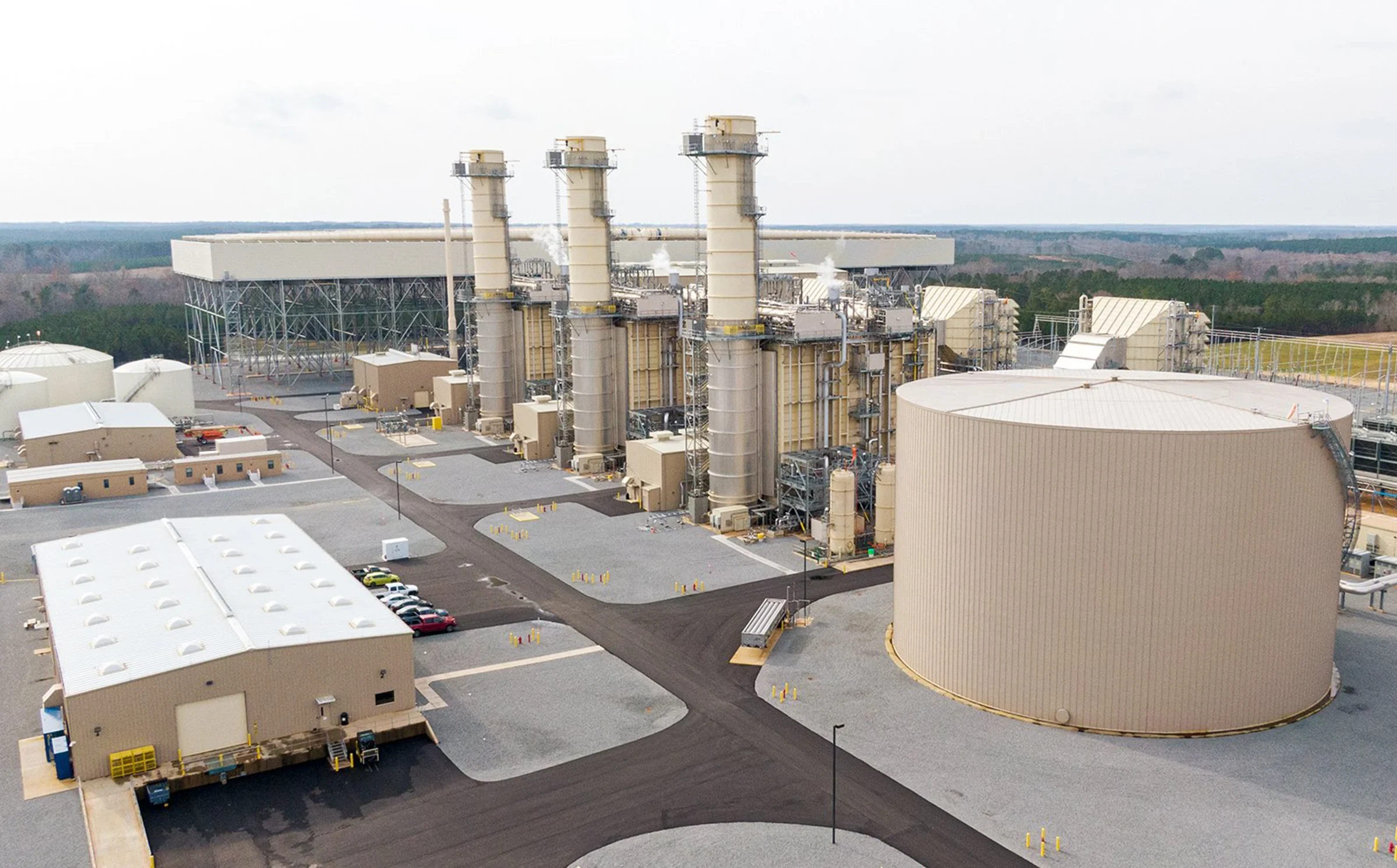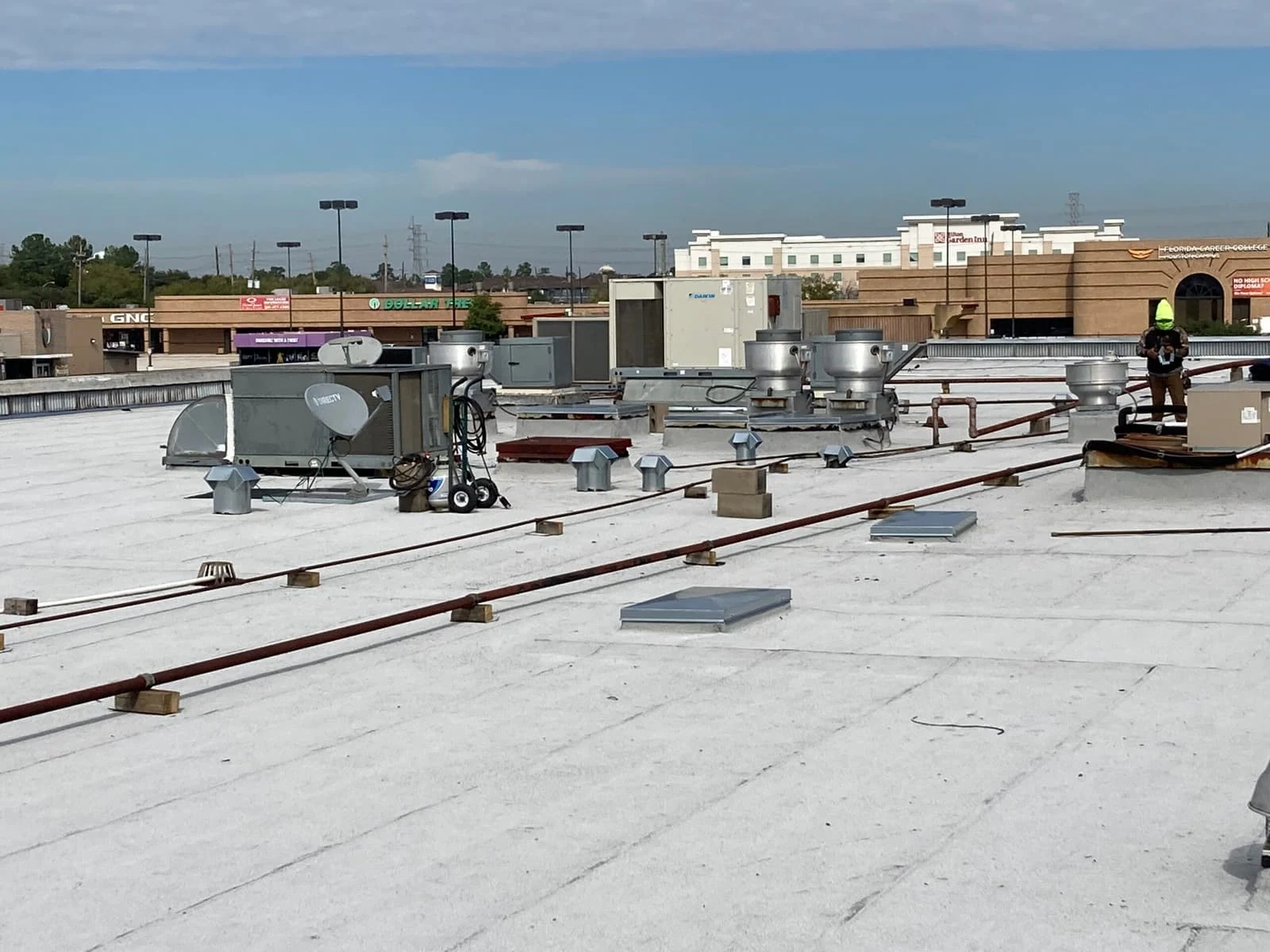
The Roanoke Valley still runs on manufacturing, from tire production in Salem to smaller machine shops and metal fabricators tucked along the rail corridors that built this region. Plant roofs here carry process exhaust, heavy rooftop units, and vibration loads that a warehouse roof never sees, and we design and repair around those differences instead of treating every low-slope roof the same.
Rubber compounding, curing ovens, and paint or coating lines all vent heat and particulate onto the roof above them. Membrane exposed to that kind of discharge ages faster than a standard field membrane, and we account for it by upsizing membrane thickness or switching chemistry in the zone directly downwind of a stack, rather than running one spec across the whole roof.
Where a plant runs a curing or bake process, deck temperatures below the membrane can run warmer than a typical building, which changes how insulation performs over time. We check thermal bridging at curbs serving process exhaust separately from curbs serving standard HVAC, since the two see very different service conditions.
Salem's tire manufacturing operations and the legacy industrial buildings that trace back to the region's GE presence both run rooftop equipment loads that were sized for an earlier generation of process technology. When a plant adds a new dust collector, cooling unit, or exhaust fan decades after the original roof went in, the added curb weight and discharge pattern rarely match what the original design accounted for, so we treat every new rooftop addition as a reason to re-check membrane and insulation compatibility in that zone.
Heavy stamping presses, extrusion lines, and material handling equipment transmit vibration up through the structure, and over years that vibration can work fasteners loose at the deck-to-membrane connection faster than on a static warehouse. We inspect fastener backout as a standard part of any maintenance visit on an active plant roof, well before renewal comes up.
Bar joist decks on some of the older manufacturing buildings near the rail corridors were engineered for the loads and equipment layouts of decades past. Before we specify a fastening pattern or add rooftop equipment, we confirm the deck's current structural capacity rather than assuming it matches a modern spec sheet.
Manufacturing buildings along I-81 and the rail spurs tend to run long and low, and that length means thermal movement adds up across the field of the roof. We detail expansion joints to match the structure's actual movement, not a generic spacing pulled from a manufacturer's default drawing, because undersized joints on a 400-foot production bay show up as split membrane within a few seasonal cycles.
Roanoke's freeze-thaw swings through the shoulder seasons put extra stress on those joints. A membrane that handles summer expansion fine can still crack at a joint that wasn't sized for the contraction that follows a hard overnight freeze in March.
Plant managers can't halt a production line for a reroof, so we sequence work in sections tied to shift schedules and planned maintenance shutdowns. Where a line runs continuously, we build temporary protection over active curbs and keep foot traffic and material staging away from areas where a dropped tool or debris could reach the floor below.
We coordinate crane and hoist paths with the plant's own material handling routes so our access doesn't compete with forklift traffic or rail spur deliveries during the project.
Roanoke's rail heritage still shapes how several plants in the valley receive materials, and buildings served by an active rail spur have equipment and staging patterns tied to railcar schedules rather than truck docks alone. We work our crane and lift picks around those spur deliveries instead of assuming the loading dock is the only access point that matters on a given day.
We assess what's venting through each stack and specify membrane chemistry and flashing detail for that exposure zone specifically, instead of running one membrane spec across the entire roof.
In most cases yes. We phase the project around shift schedules and planned downtime, and we protect active equipment curbs through the work window so operations don't stop.
We recommend it, especially on bar joist decks built decades ago. Confirming current load capacity before adding equipment or changing the roof assembly avoids problems that show up later as deck deflection.
We inspect fastener backout at deck connections as part of routine maintenance on active plant roofs, since ongoing vibration loosens fasteners faster than on a static building.
We specify assemblies that meet the fire rating required near spray booths and coating operations, coordinated with whatever the plant's insurance carrier or local code official requires for that occupancy.