Commercial Roof Maintenance Programs in Roanoke
Roof Maintenance Programs Structured Around the Valley's Freeze-Thaw Cycle
A useful maintenance program records recurring conditions, clears drainage, services vulnerable details, tracks repairs, and turns each visit into a prioritized roof history. Most roof failures we get called for aren't sudden. They're the end result of small things left unattended - a clogged drain that let water pond for a season too long, a seam that opened slightly and never got resealed, fasteners that backed out gradually until wind finally found an edge to lift. A maintenance program exists to catch those small things before they compound.
Why Maintenance Matters More Here
Roanoke's valley position means membranes here go through more freeze-thaw transitions per winter than roofs in flatter, lower-elevation parts of the state. Each cycle stresses seams and flashing joints a little more. A roof that gets routine attention through that cycle - clearing drains before a freeze, resealing marginal seams before winter, checking flashing terminations each fall - holds up meaningfully longer than one that only gets looked at when something's already leaking.
We built our maintenance visits around that reality rather than a generic quarterly template. Fall visits focus on winter-proofing; spring visits focus on freeze-thaw damage assessment and drain clearing ahead of storm season.
The Assembly Points We Check Each Visit
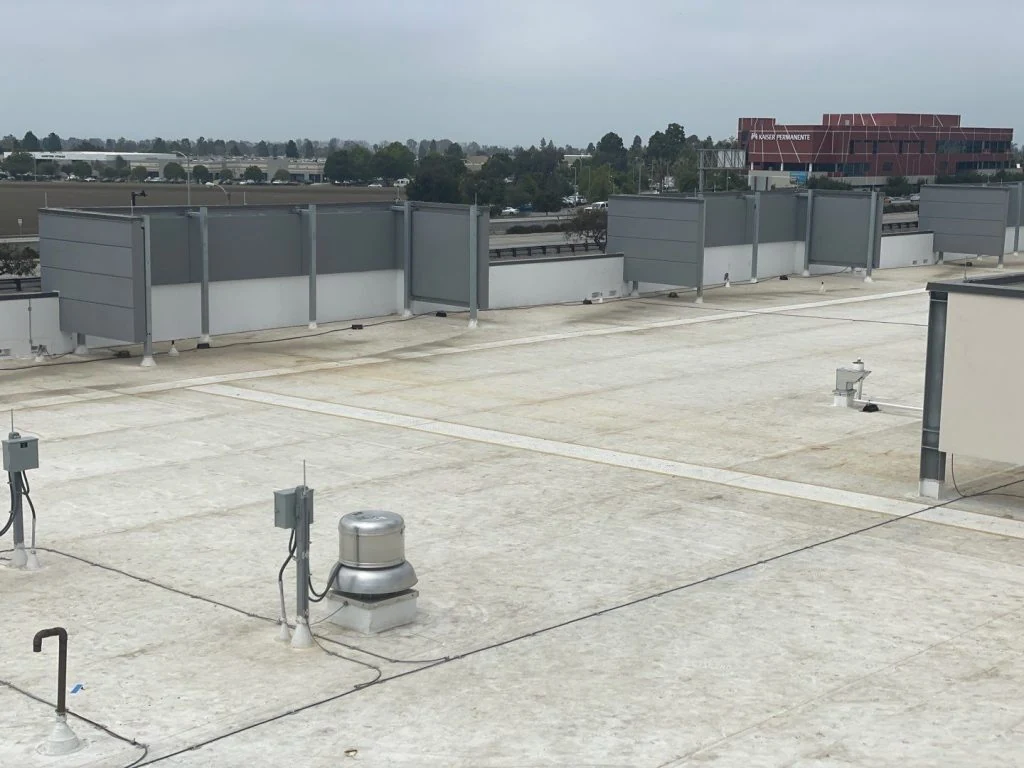
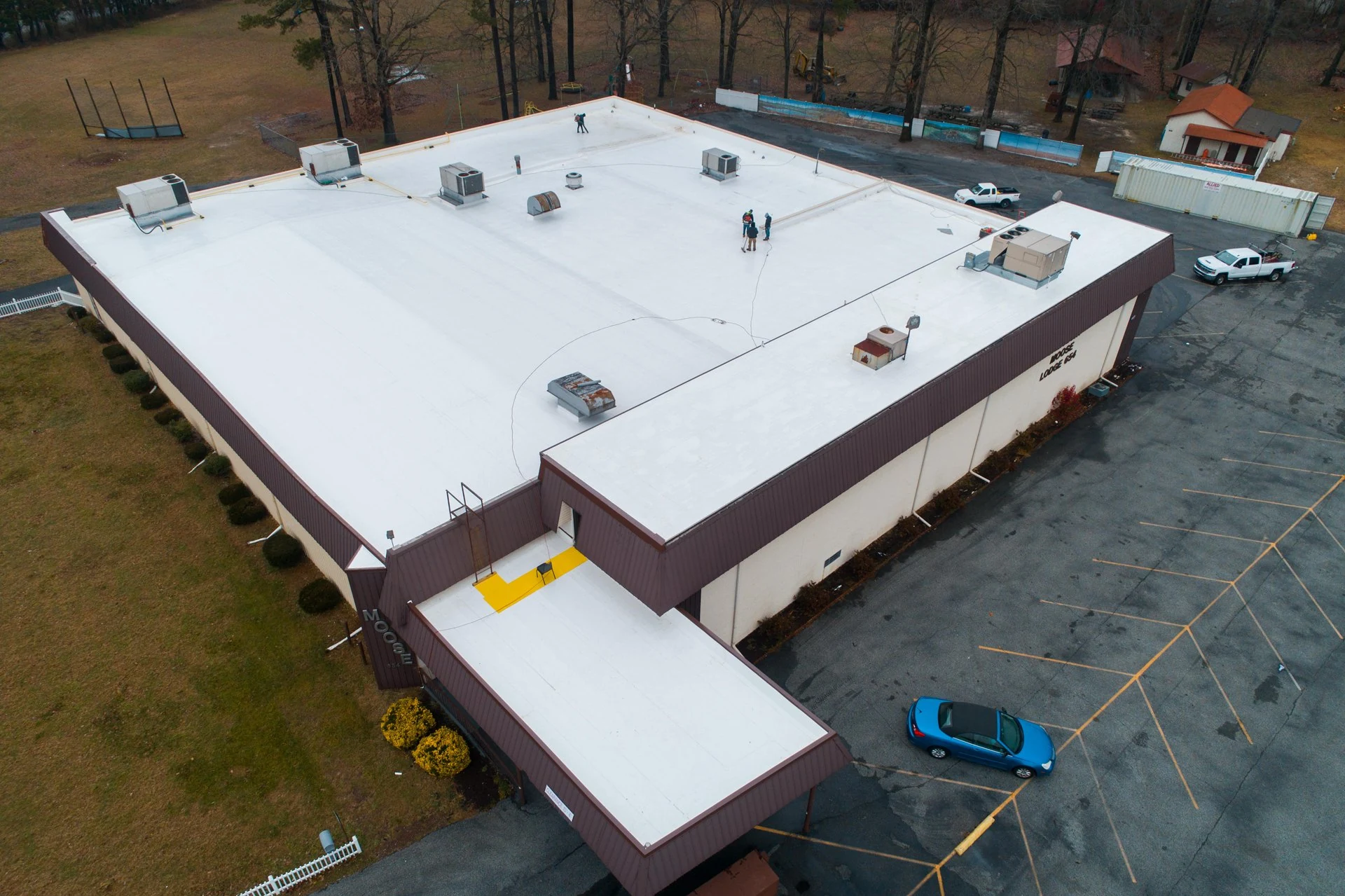
Each visit includes drain and scupper clearing, a walk of all seams and flashing terminations, fastener check at high-wind zones like corners and perimeters, and debris removal from rooftop equipment areas where leaves and grit tend to collect against curbs. We also check sealant condition at penetrations, since UV and thermal cycling degrade sealant faster than most owners expect.
On properties with heavy tree cover near Mill Mountain or the wooded edges of the valley, debris accumulation on the roof and in drains is a bigger factor than it is on open industrial sites near the I-81 corridor, so we adjust visit frequency and scope to the specific site conditions rather than applying one schedule everywhere.
Tracking Condition Over Multiple Visits
A single maintenance visit tells you the roof's condition on that day. What we're really building over time is a trend line - whether seam wear is stable, whether a particular drain keeps needing extra attention each cycle, whether fastener backout at one corner zone is worsening year over year. That trend data is more useful than any single visit report, because it tells us whether the roof is aging normally or whether something specific needs a closer look before it becomes a bigger repair.
We keep this history on file per building so a new property manager or owner inheriting a portfolio can see the roof's maintenance record at a glance rather than starting from zero.
- Drain and scupper clearing before freeze and storm seasons
- Seam and flashing termination walk-through at every visit
- Fastener check concentrated at corners and perimeter zones
- Sealant condition check at penetrations and equipment curbs
- Debris removal from rooftop equipment areas
- Written visit log tracking condition changes over time
Budget Predictability for Property Managers
For owners and property managers running multiple buildings, a maintenance program turns roof spending into a predictable line item instead of a series of emergency calls that always seem to land at the worst time. We track condition trends across visits so you can see whether a roof is holding steady or heading toward a repair or replacement decision, and plan capital budgets accordingly rather than getting surprised.
Keeping NDL Warranties Valid Through Documentation
Manufacturer warranties frequently require documented maintenance to stay valid, and a lapsed maintenance record is one of the more common reasons a warranty claim gets denied. Our visit logs give you that documentation automatically, so the paperwork is already in place if you ever need to file a claim.
Adjusting the Program Over a Roof's Life
A newer membrane needs less intervention than one approaching the end of its service life. As a roof ages, we typically recommend increasing visit frequency and paying closer attention to seam condition, since older membranes lose flexibility and become more prone to cracking under the same freeze-thaw stress that a newer roof shrugs off. We'll tell you directly when a roof has crossed the point where maintenance is mostly buying time rather than genuinely extending service life, so budgeting for eventual replacement isn't a surprise.
Questions About Maintenance Programs
How many visits per year does a typical program include?
Most properties here do well with two scheduled visits - one in fall ahead of winter, one in spring after the freeze-thaw season - plus an additional check after any major storm. We adjust frequency based on roof age and site conditions.
Does maintenance replace the need for inspections?
Maintenance visits include an inspection component, but a full documented inspection for warranty or due-diligence purposes is a more thorough process. Many property managers combine both.
What's included if a problem is found during a visit?
Minor items like resealing a marginal seam or clearing a drain are typically handled during the visit itself. Larger findings get scoped and quoted separately so you have full visibility into cost before we proceed.
Is a maintenance program worth it on a newer roof?
Yes, arguably more so - catching small issues on a newer roof preserves the manufacturer warranty and extends the roof's effective life well past what happens when maintenance starts only after the warranty period ends.
Can maintenance programs be customized per building?
Yes. Tree cover, rooftop equipment density, membrane age, and building use all factor into how we scope a program, so two buildings on the same street can end up with different visit schedules based on actual condition.
Ready to review the roof scope?
Request a Roof Assessment
Commercial Roof Maintenance and Service Agreements in Roanoke
A useful maintenance program records recurring conditions, clears drainage, services vulnerable details, tracks repairs, and turns each visit into a prioritized roof history. Most roof failures we get called for aren't sudden. They're the end result of small things left unattended - a clogged drain that let water pond for a season too long, a seam that opened slightly and never got resealed, fasteners that backed out gradually until wind finally found an edge to lift. A maintenance program exists to catch those small things before they compound.
Why Maintenance Matters More Here
Roanoke's valley position means membranes here go through more freeze-thaw transitions per winter than roofs in flatter, lower-elevation parts of the state. Each cycle stresses seams and flashing joints a little more. A roof that gets routine attention through that cycle - clearing drains before a freeze, resealing marginal seams before winter, checking flashing terminations each fall - holds up meaningfully longer than one that only gets looked at when something's already leaking.
We built our maintenance visits around that reality rather than a generic quarterly template. Fall visits focus on winter-proofing; spring visits focus on freeze-thaw damage assessment and drain clearing ahead of storm season.
The Assembly Points We Check Each Visit
Each visit includes drain and scupper clearing, a walk of all seams and flashing terminations, fastener check at high-wind zones like corners and perimeters, and debris removal from rooftop equipment areas where leaves and grit tend to collect against curbs. We also check sealant condition at penetrations, since UV and thermal cycling degrade sealant faster than most owners expect.
On properties with heavy tree cover near Mill Mountain or the wooded edges of the valley, debris accumulation on the roof and in drains is a bigger factor than it is on open industrial sites near the I-81 corridor, so we adjust visit frequency and scope to the specific site conditions rather than applying one schedule everywhere.
Tracking Condition Over Multiple Visits
A single maintenance visit tells you the roof's condition on that day. What we're really building over time is a trend line - whether seam wear is stable, whether a particular drain keeps needing extra attention each cycle, whether fastener backout at one corner zone is worsening year over year. That trend data is more useful than any single visit report, because it tells us whether the roof is aging normally or whether something specific needs a closer look before it becomes a bigger repair.
We keep this history on file per building so a new property manager or owner inheriting a portfolio can see the roof's maintenance record at a glance rather than starting from zero.
- Drain and scupper clearing before freeze and storm seasons
- Seam and flashing termination walk-through at every visit
- Fastener check concentrated at corners and perimeter zones
- Sealant condition check at penetrations and equipment curbs
- Debris removal from rooftop equipment areas
- Written visit log tracking condition changes over time
Budget Predictability for Property Managers
For owners and property managers running multiple buildings, a maintenance program turns roof spending into a predictable line item instead of a series of emergency calls that always seem to land at the worst time. We track condition trends across visits so you can see whether a roof is holding steady or heading toward a repair or replacement decision, and plan capital budgets accordingly rather than getting surprised.
Keeping NDL Warranties Valid Through Documentation
Manufacturer warranties frequently require documented maintenance to stay valid, and a lapsed maintenance record is one of the more common reasons a warranty claim gets denied. Our visit logs give you that documentation automatically, so the paperwork is already in place if you ever need to file a claim.
Adjusting the Program Over a Roof's Life
A newer membrane needs less intervention than one approaching the end of its service life. As a roof ages, we typically recommend increasing visit frequency and paying closer attention to seam condition, since older membranes lose flexibility and become more prone to cracking under the same freeze-thaw stress that a newer roof shrugs off. We'll tell you directly when a roof has crossed the point where maintenance is mostly buying time rather than genuinely extending service life, so budgeting for eventual replacement isn't a surprise.
Questions About Maintenance Programs
How many visits per year does a typical program include?
Most properties here do well with two scheduled visits - one in fall ahead of winter, one in spring after the freeze-thaw season - plus an additional check after any major storm. We adjust frequency based on roof age and site conditions.
Does maintenance replace the need for inspections?
Maintenance visits include an inspection component, but a full documented inspection for warranty or due-diligence purposes is a more thorough process. Many property managers combine both.
What's included if a problem is found during a visit?
Minor items like resealing a marginal seam or clearing a drain are typically handled during the visit itself. Larger findings get scoped and quoted separately so you have full visibility into cost before we proceed.
Is a maintenance program worth it on a newer roof?
Yes, arguably more so - catching small issues on a newer roof preserves the manufacturer warranty and extends the roof's effective life well past what happens when maintenance starts only after the warranty period ends.
Can maintenance programs be customized per building?
Yes. Tree cover, rooftop equipment density, membrane age, and building use all factor into how we scope a program, so two buildings on the same street can end up with different visit schedules based on actual condition.
Build a roof record another decision-maker can use
For Commercial Roofing of Roanoke, the field file should capture inspection dates, roof-zone photographs, open items, completed repairs, drain-cleaning records, storm observations, warranty information, and the next planned visit. Each note needs a roof-area reference so a photograph or recommendation can be found again after the visit. During the visit, the technician should inspect on a repeatable schedule, clear accessible drainage, document changes, prioritize minor repairs, and preserve a usable history for every roof area. Wide views, detail views, measurements, markings, and interior references make the findings reproducible instead of dependent on memory. Observed facts, recommended actions, completed work, and open items should never share one unlabeled list. Separating them lets an off-site approver see exactly what was authorized and what still needs a decision.
Do not force different roof systems into one repair assumption
A detail that is repairable on TPO 80 Mil may require different preparation or materials on Modified Bitumen Systems or PVC Roof Systems. Existing layers, surfacing, attachment, and earlier repair products matter before new materials are selected. Record membrane type, surfacing, insulation and cover-board clues, attachment, flashings, penetrations, edges, and earlier repairs. If the assembly cannot be confirmed visually, say so and define the core or document review needed to confirm it. Drainage stays in the analysis because a sound patch cannot correct water held against a curb, an overloaded outlet, or settlement at a low point. System language should support which defects are routine service, which require a separate repair scope, and when the condition trend should trigger restoration or capital planning instead of functioning as a product catalog.
Keep the occupied building in the scope
A technically correct detail is only part of the job at Roanoke properties such as Healthcare Systems, Government Public Sector, and Retail Chain Operators. The plan also has to protect people, inventory, equipment, and normal access below the roof. Access and protection notes should cover ladders or hatches, staging, falling-object zones, odor and noise, equipment clearances, daily cleanup, weather stops, and the rooms directly below openings or test cuts. Wet-weather work may stop at stabilization because permanent materials need a clean, dry substrate and a workable forecast. Daily closeout should state what was opened, completed, and left under temporary protection.
Use condition thresholds instead of sales pressure
The decision point is which defects are routine service, which require a separate repair scope, and when the condition trend should trigger restoration or capital planning. The evidence may support a small permanent repair, a broader corrective scope, a restoration evaluation, recover design, or tear-off, but the report needs to show why. Decision thresholds include moisture extent, remaining secure attachment, deck condition, prior repair performance, drainage, assembly compatibility, operational risk, budget timing, and the period the owner expects the roof to remain in service. This prevents an urgent call from becoming an automatic reroof pitch. It also prevents endless patches from consuming money on a roof whose moisture, failures, or lifecycle cost has crossed a reasonable replacement threshold.
Carry today's evidence into the next roof decision
After this scope, the record should advance to a service agreement that remains active while larger repair or replacement projects are scoped separately. Carrying the same roof-zone names and evidence forward prevents the next visit from starting with an empty file. The record should support both field work and management review. Technicians need locations and prior details; ownership needs priorities, open risk, completed spending, next inspection dates, and a defensible future sequence. Recurring service should not disappear when a capital project begins. Commercial Roofing of Roanoke can preserve the agreement and roof history while larger work is scoped, completed, closed out, and returned to inspection status.
Give the first call enough information to work
The first conversation about a roof that is still serviceable but needs scheduled eyes on drainage, flashings, seams, penetrations, traffic areas, sealants, previous repairs, and developing defects should establish the Roanoke property address, contact on site, roof-access method, affected interior area, when water was first observed, whether entry is active, and any immediate safety concern. The caller should not be asked to diagnose the assembly from the floor. A short description of timing, location, volume, affected equipment, and previous occurrences is more useful than guessing which roof product failed. That intake determines whether the immediate need is interior protection, controlled roof access, weather-limited stabilization, drainage attention, or a scheduled diagnostic visit. It also gives the crew a safer and more focused starting point.
Make allowances and exclusions visible
Pricing is easier to evaluate when the scope shows which conditions were measured, which were observed but not opened, and which remain concealed. Unit prices or allowances can address uncertainty without pretending the quantity is already known. Schedule assumptions also belong beside price: weather windows, material lead time, permits, shutdowns, tenant coordination, daily dry-in, and access restrictions. An unexplained low number can become an expensive sequence of changes if these constraints are omitted. When assumptions are visible, the owner can decide whether to investigate further before award or carry a controlled contingency. Either choice is stronger than discovering that two supposedly comparable bids covered different roofs.
Connect the roof problem to the building and weather
Weather around Roanoke, VA combines heavy thunderstorms, tropical remnants, wind-driven rain, heat, and freeze-thaw transitions. The timing of that exposure can reveal a weak detail, yet the weather event and the leak source are not automatically the same thing. Interior evidence should be mapped to a roof elevation before anyone chooses a drain, wall, curb, seam, penetration, or edge as the cause. Water can move laterally through insulation, along deck flutes, or down structural elements and appear away from the opening. A durable scope begins by separating symptoms from causes. Record what was observed, what remains an inference, and what weather, access, equipment, overburden, or concealed construction prevented the crew from confirming.
Roanoke decision checklist
- Map the interior symptom to a named roof area before selecting a repair detail.
- Record temporary measures separately from permanent work and list every open item.
- Verify drainage, penetrations, walls, edges, earlier repairs, and transitions around the affected area.
- State the observed roof assembly, unknown construction, access limits, and testing assumptions.
- Connect the recommendation to repair, restoration, replacement, maintenance, or capital-planning thresholds.
- Set the next inspection or follow-up date so the roof history continues after this visit.
Commercial roof decision questions
Does this condition automatically mean the roof must be replaced?
No. The review should establish which defects are routine service, which require a separate repair scope, and when the condition trend should trigger restoration or capital planning. Replacement becomes a defensible recommendation only when the field evidence, moisture, assembly condition, repair history, deck or attachment concerns, and lifecycle comparison support it.
What should the Roanoke roof scope document?
It should document inspection dates, roof-zone photographs, open items, completed repairs, drain-cleaning records, storm observations, warranty information, and the next planned visit. It should also label temporary and permanent work separately, state assumptions and exclusions, and identify the inspection or service step that follows the current scope.
How does an urgent call become a maintenance or capital plan?
The immediate visit creates the first roof-area record. A follow-up inspection establishes condition and priorities. Completed repairs, recurring observations, drain service, warranties, and future recommendations are then retained so maintenance stays scheduled and larger work can be placed into the appropriate capital year.
From service call to roof plan
Use the next decision, not the biggest sale.
Stabilize the problem, document the roof, compare the viable paths, and keep the resulting roof history active.
Request commercial roof help