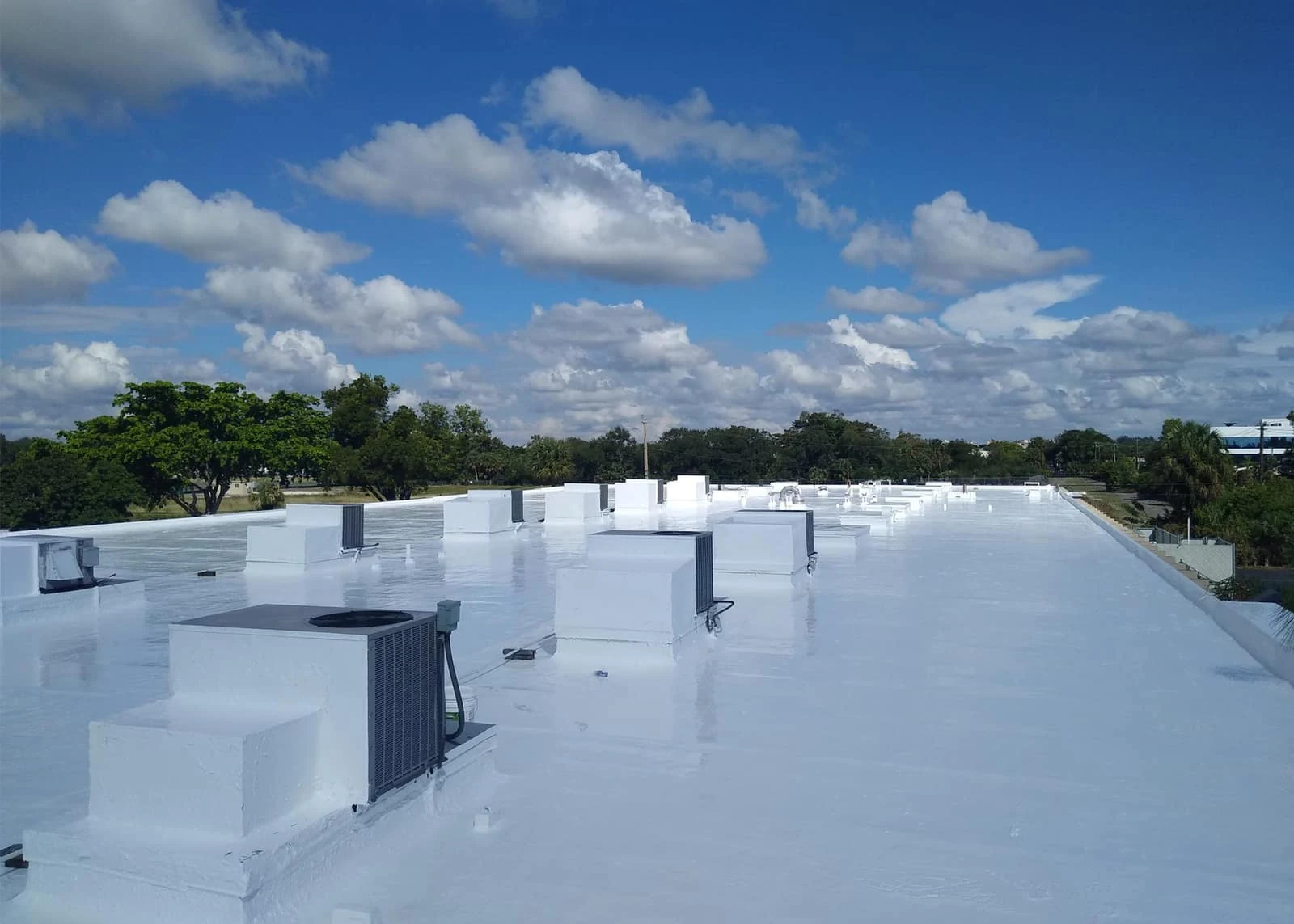
White EPDM pairs the low-temperature flexibility of rubber membrane chemistry with a reflective top surface, which puts it in a specific niche for the Roanoke Valley: owners who want the cold-weather forgiveness of EPDM through our freeze-thaw winters without giving up the solar reflectivity that keeps a roof cooler through a humid subtropical summer.
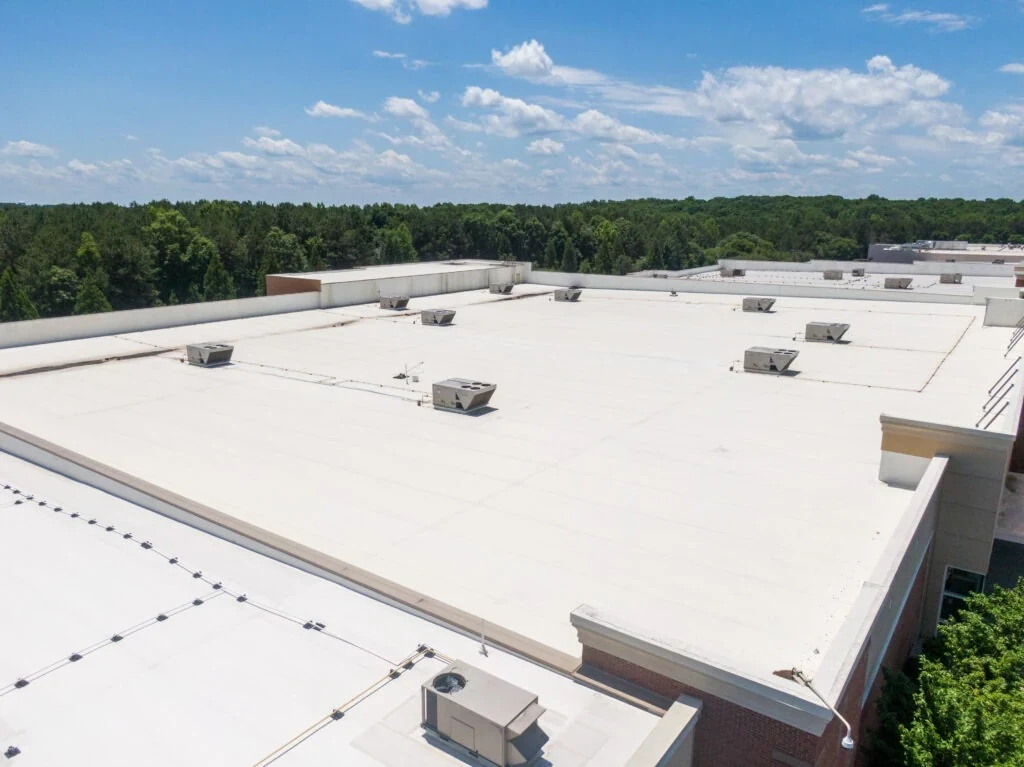
Standard EPDM gets its black color from carbon black filler in the rubber compound. White EPDM adds a reflective surface layer, either a co-cured white face-ply or a factory-applied coating, over the same underlying rubber sheet, so the membrane keeps EPDM's flexibility at low temperature while running cooler under summer sun than the black version does.
That cooler surface temperature matters through a Roanoke summer, when dew points stay elevated and the roof deck absorbs heat through long, humid afternoons. A membrane that runs cooler ages more slowly at the surface, and it reduces the daily thermal expansion-contraction swing that drives fatigue at seams and flashings over years of service.
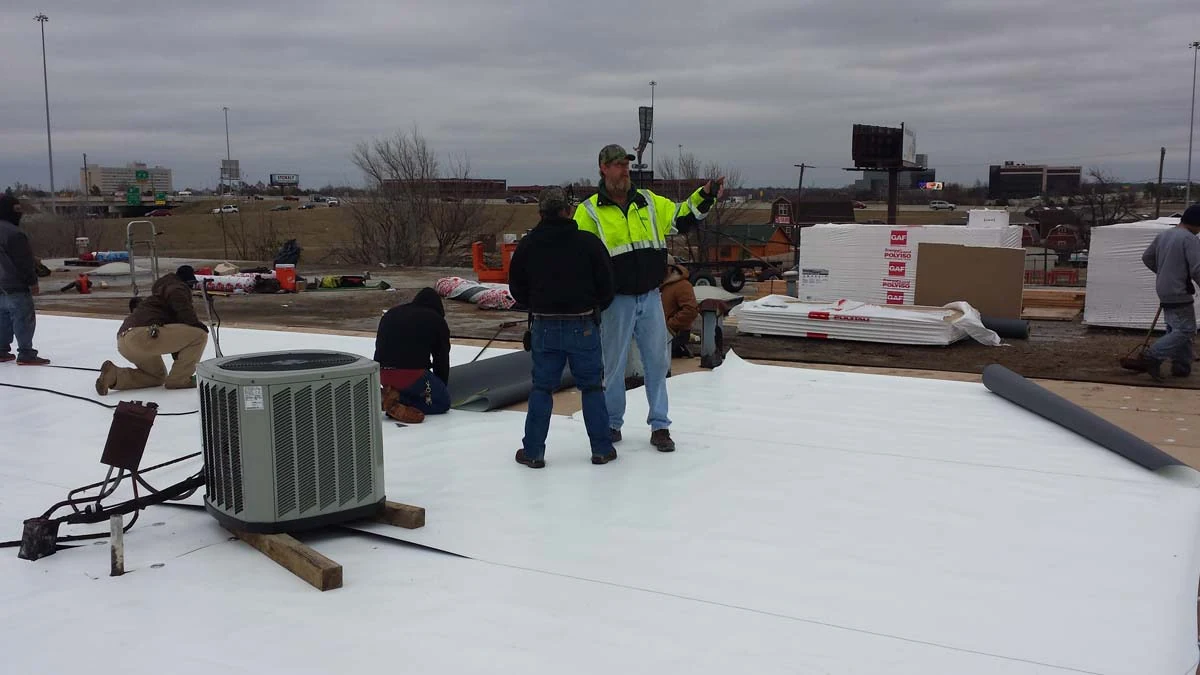
White EPDM installs with the same attachment options as black EPDM, ballasted, mechanically attached, or fully adhered, and the uplift calculation follows the same ASCE 7 framework: open valley-floor sites near I-81 distribution corridors typically fall under Exposure C, while a building close to a ridge crest or escarpment near Bent Mountain or the Blue Ridge Parkway can pick up a topographic speed-up factor that raises the design pressure at corners and perimeter well past what a sheltered site would need.
We size the attachment method to that calculation rather than defaulting to ballast because it is the simplest installation. On a ridge-adjacent site, mechanically attached or fully adhered EPDM with a fastening pattern matched to the actual uplift pressure is often the more defensible spec, even though ballast has a lower material cost.
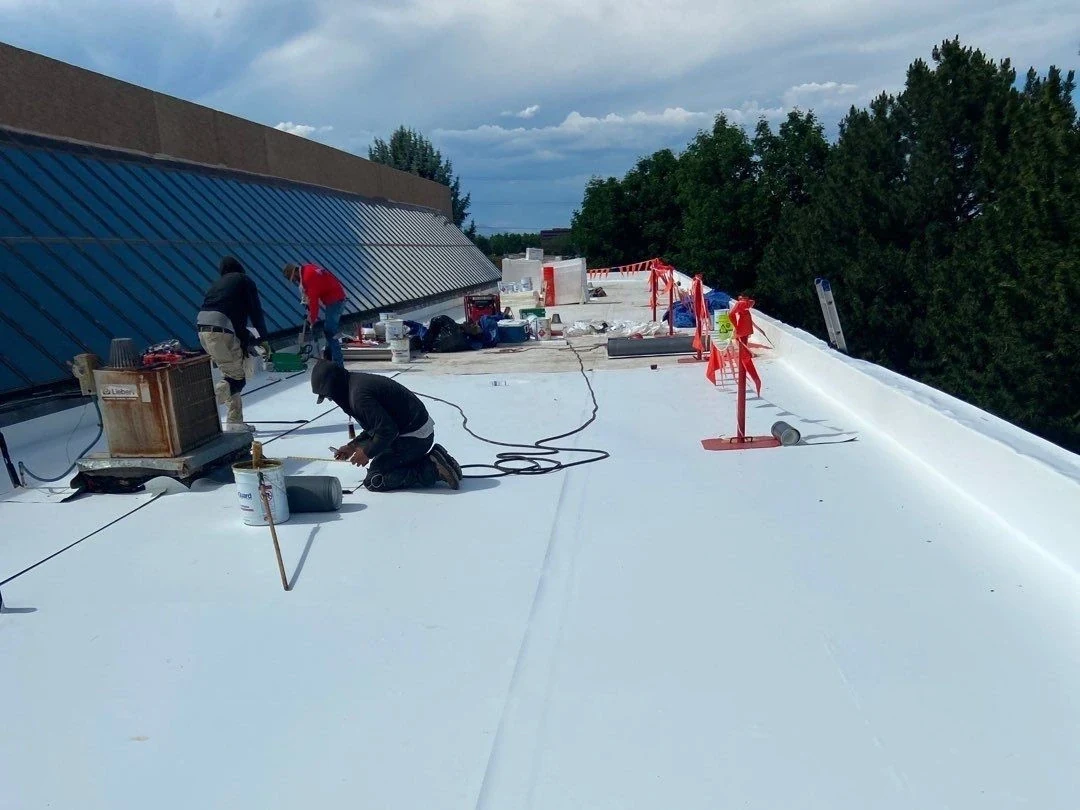
White EPDM bonds at the seams the same way black EPDM does, liquid adhesive or seam tape rather than a hot-air weld, and that adhesive cure is sensitive to ambient temperature and humidity during installation. Morning valley fog, common in the Roanoke River bottomland and low-lying sections of the market, can leave a deck too damp for adhesive application until the sun burns it off, so our crews sequence seam work around actual site conditions rather than a fixed daily schedule.
We also probe every completed seam before calling a section finished, because an EPDM seam that looks bonded at the edge can still have an inadequately cured section in the middle, and that is the failure point freeze-thaw cycling will eventually find.
Owners sometimes ask why they would choose white EPDM over white TPO, since both offer a reflective surface. The answer usually comes down to seam technology and low-temperature performance: TPO's hot-air weld creates a more uniform, inspectable seam, while EPDM's rubber compound tolerates cold-weather flexing and thermal movement at parapets and curbs somewhat better over a long service life. Neither is universally superior, the right choice depends on the deck, the attachment method the building can support, and whether the project is new construction or a recover over an existing EPDM assembly.
Recover projects over an existing EPDM roof are a common path to white EPDM specifically, since staying within the same membrane chemistry avoids compatibility questions with the existing insulation and flashing details.
A white EPDM roof needs the reflective surface checked for soiling and coating wear as part of routine maintenance, since a surface that has picked up dirt or has begun to chalk loses reflectivity gradually, not all at once, and that loss is easy to miss without a scheduled inspection.
We pair that surface check with the same seam and flashing inspection we run on black EPDM, twice yearly, because the membrane's rubber base is subject to the same freeze-thaw seam stress regardless of the surface color.
The reflective surface layer does weather gradually under UV exposure and can pick up soiling that reduces reflectivity before the membrane itself is failing. We check surface condition during scheduled maintenance and can recommend a cleaning or recoat cycle when reflectivity has dropped meaningfully.
It can be, but the attachment method matters more than the membrane color. A site with a topographic wind speed-up factor under ASCE 7 needs a fastening or adhesion design matched to that added uplift pressure, we run that calculation before recommending ballasted, mechanically attached, or fully adhered installation.
Both offer reflectivity. TPO's hot-air welded seams are more uniformly inspectable, while EPDM's rubber base tends to tolerate low-temperature flexing at flashings somewhat better over a long service life. The right choice depends on the deck, attachment method, and whether the project is a recover over existing EPDM.
EPDM seams cure with liquid adhesive rather than a hot-air weld, and that cure is sensitive to moisture and temperature. Morning fog common in low-lying sections of the market can leave a deck too damp for adhesive application until conditions clear, so we sequence seam work around actual site conditions.
Often yes, once moisture cores confirm dry insulation and a sound deck, and provided the building has not reached the code limit on membrane layers. Staying within EPDM chemistry on a recover avoids compatibility questions with the existing flashing and insulation package.