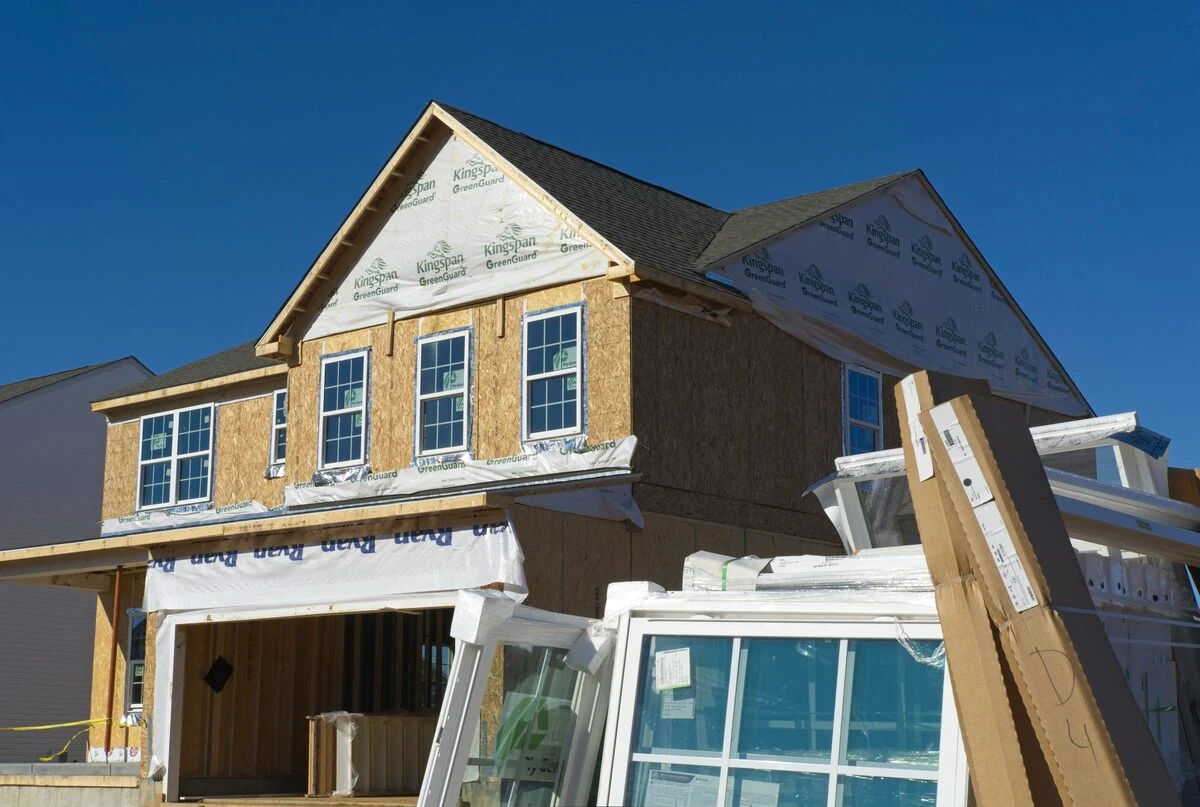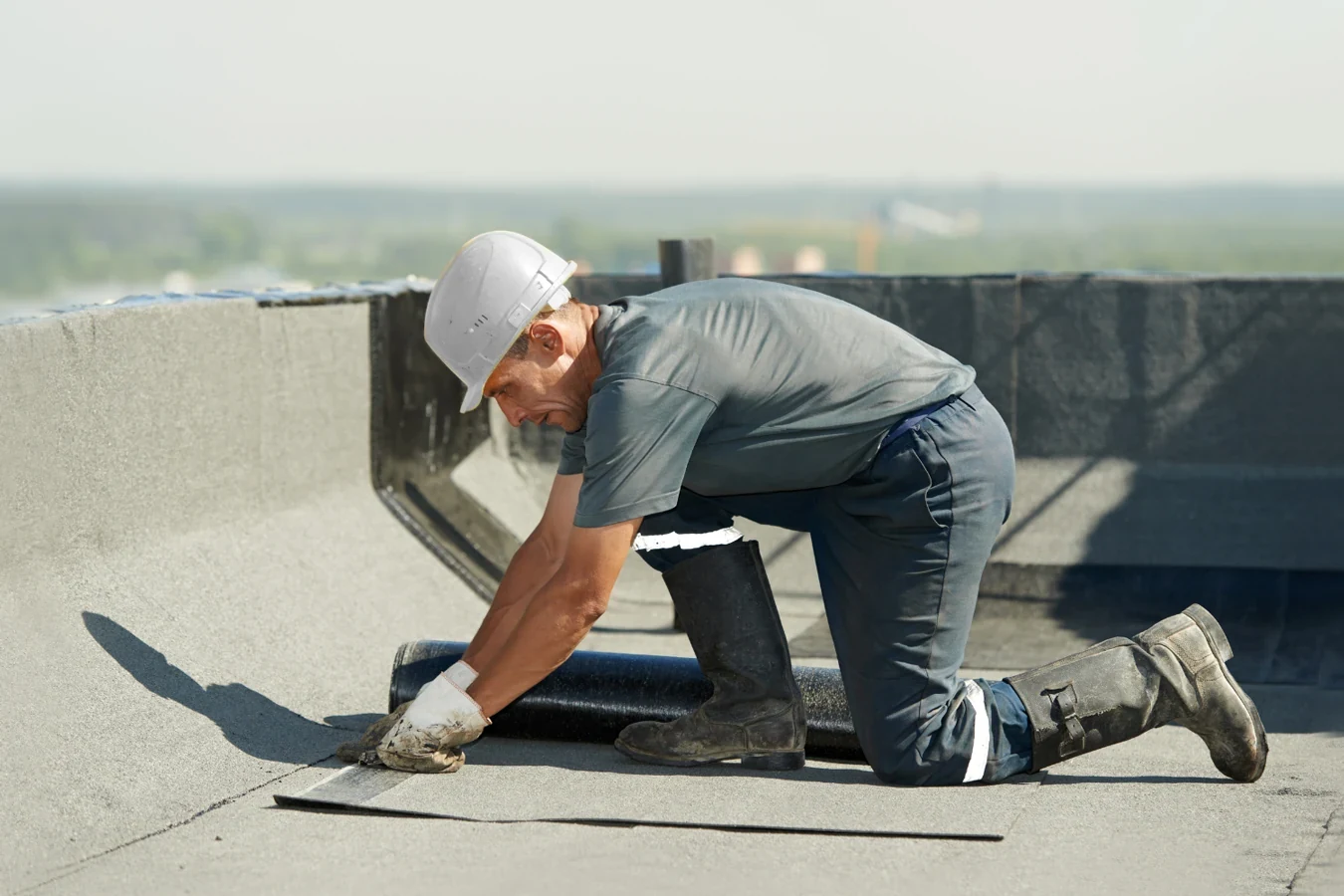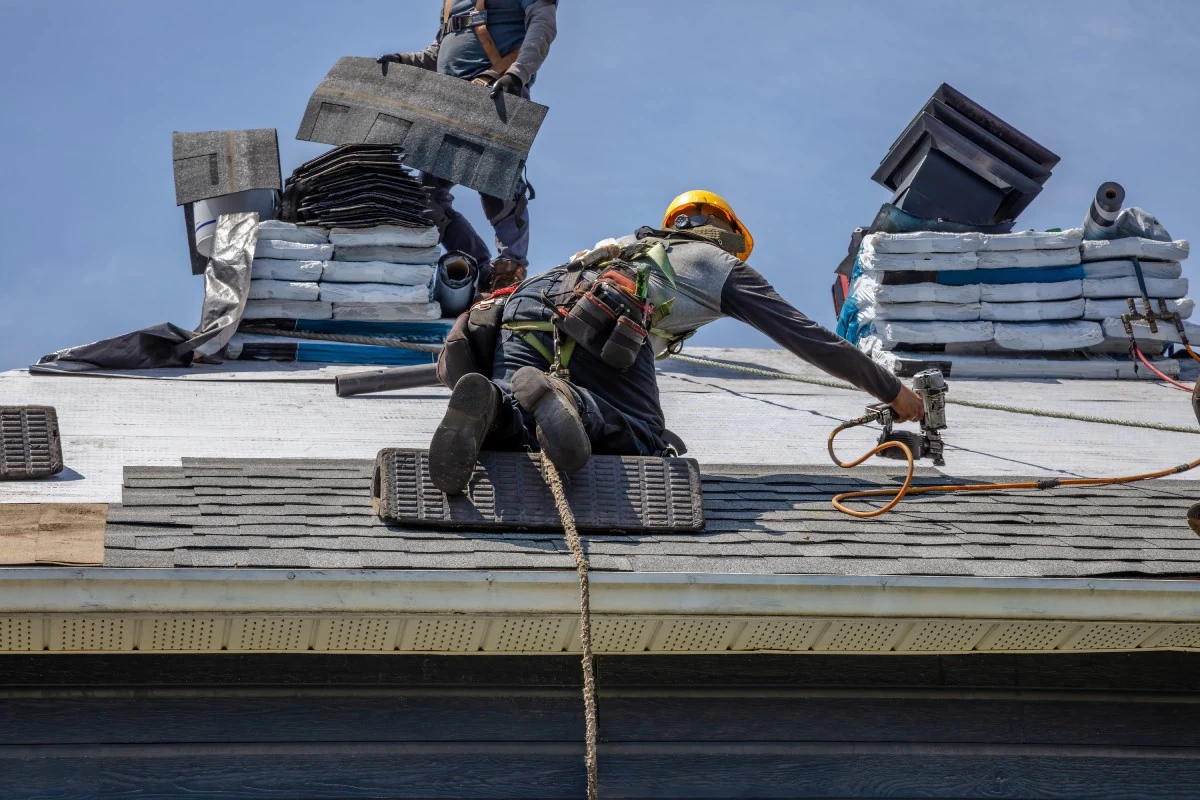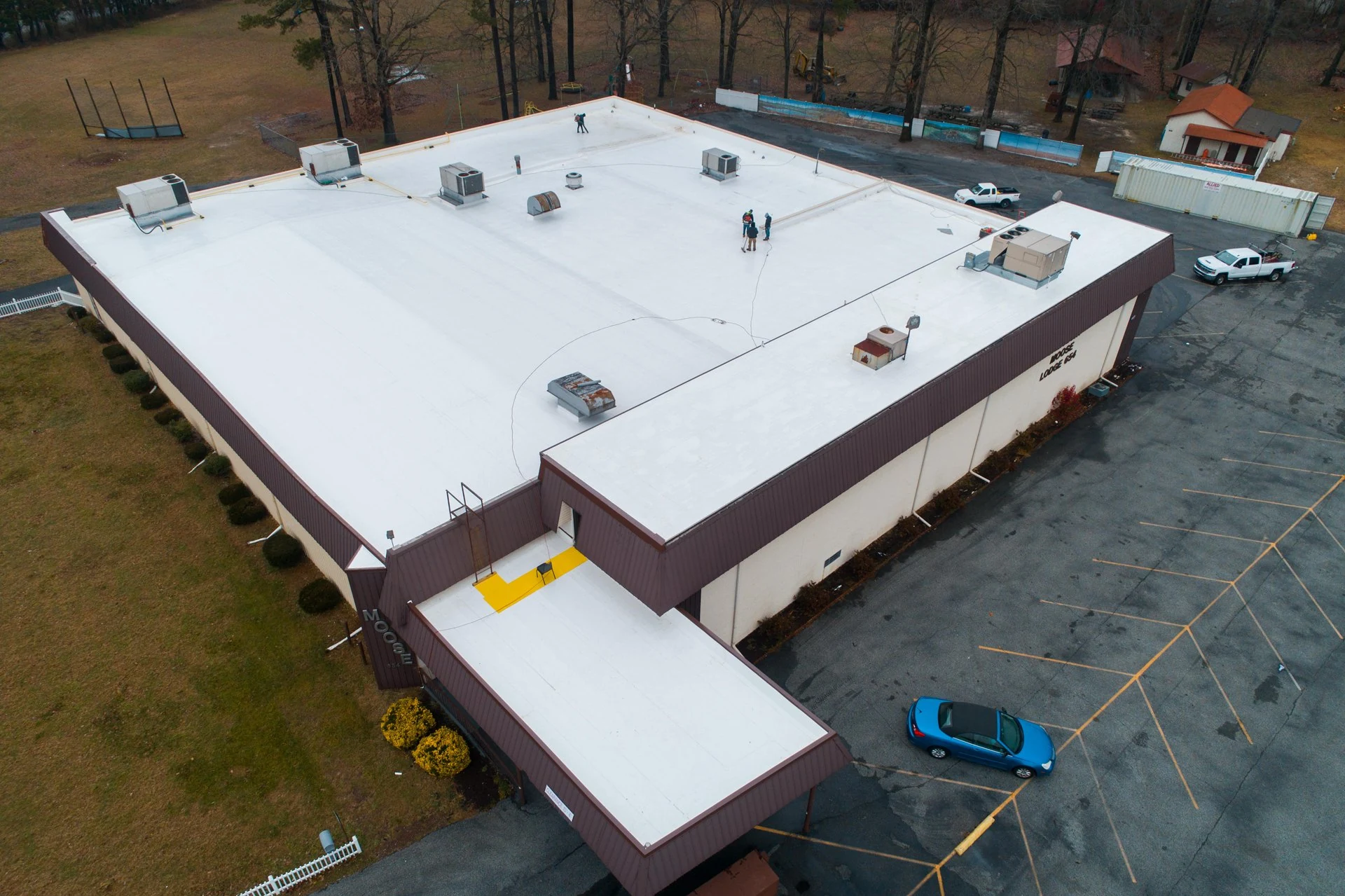
TPO has become the default single-ply choice on new low-slope commercial roofs across Roanoke, and for good reason: heat-welded seams, reflective surface, and a fastening system that can be tuned to the wind exposure of a specific site. We install and repair TPO on office buildings, retail centers, and warehouse roofs from downtown out to the I-81 corridor.
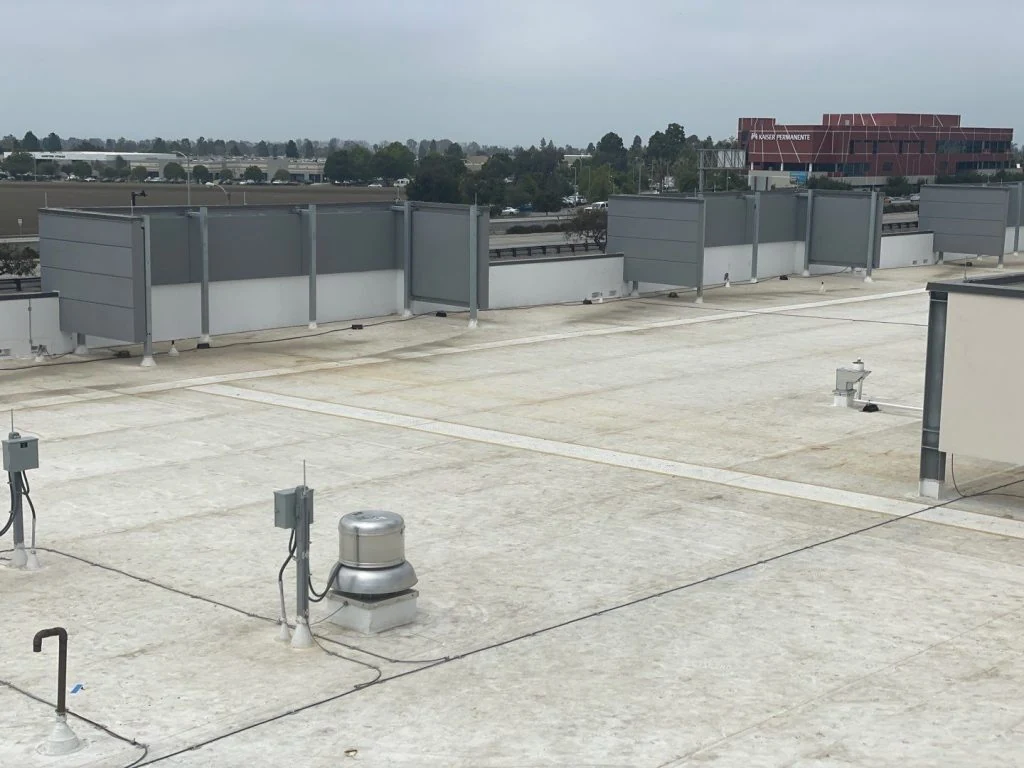
TPO membrane welds itself into a homogeneous seam rather than relying on adhesive alone, which gives it an edge over older single-ply systems on buildings where seam count is high, like roofs broken up by multiple rooftop units and curbs. That matters on a lot of Roanoke's medical office and light-industrial stock, where mechanical penetrations are dense and every seam is a potential leak point if it is not welded correctly.
The membrane's reflective white surface also helps on buildings running heavy HVAC loads through Roanoke's humid summers. Lower roof surface temperatures translate into less thermal cycling stress on the membrane and, on buildings with rooftop condensing units, a modest reduction in the heat those units have to fight against.
Mechanically attached TPO gets its wind resistance from the fastening pattern, and we do not use one pattern for every roof in the valley. A building near the mouth of the Roanoke River gap or perched on a ridge-adjacent industrial park sees higher corner and perimeter uplift pressures than a sheltered building three miles into the valley floor, so the fastener spacing at those zones has to reflect the actual site, not a generic spec sheet.
We also look at deck type before finalizing the attachment plan. Steel deck, gypsum, and wood plank each hold a fastener differently, and older buildings sometimes carry a deck that was never designed for the point loads a dense fastening pattern would put on it. Fully adhered TPO becomes the better option on some of those retrofit jobs, even though it costs more up front.
A TPO roof lives or dies on its welds. We run every seam through a probe check as we go and pull test samples on larger jobs to confirm weld strength before the crew moves on to the next section. Cold weather installation, which is common enough during Roanoke's shoulder seasons, changes weld parameters, and we adjust equipment settings and probe frequency accordingly instead of pushing through a schedule at the wrong temperature.
Flashing details at parapets, curbs, and drains get the same attention as the field seams. Most TPO failures we get called out to repair started as a flashing detail that was rushed rather than a field seam that failed on its own.
Membrane thickness matters as much as system choice. We spec 60-mil membrane on most standard applications and step up to 80-mil on roofs with heavy foot traffic, exposed installations, or long-term ownership horizons where the extra material cost pencils out against a longer service life.
TPO is a low-maintenance system compared to built-up roofing, but low-maintenance is not no-maintenance. We recommend a spring and fall walk to check seam integrity, clear drains and scuppers of debris, and inspect flashing at any point where new rooftop equipment has been added since the last visit. Rooftop units installed by a mechanical contractor without roofing input are one of the most common sources of the leaks we get called to fix, because curb flashing gets an afterthought treatment.
Punch-list repairs caught early cost a fraction of what a deferred leak costs once it has damaged insulation or interior finishes below. We document every inspection with photos tied to a roof plan so an owner can track condition over time instead of relying on memory.
Most well-installed TPO systems run 20 to 25 years with regular maintenance. Humidity and UV exposure through Roanoke summers are within normal range for the membrane; wind uplift at exposed sites is the bigger variable in how long a roof performs before repair becomes necessary.
It depends on deck condition and wind exposure. Mechanically attached is faster and less expensive on a sound steel deck in a moderate exposure zone. Fully adhered handles higher uplift zones and marginal decks better, at a higher installed cost.
Often yes, if the existing insulation is dry and the deck is sound. We confirm with a moisture scan before recommending recover over an existing membrane; wet insulation underneath has to come out regardless of the new system chosen.
Curb flashing is the most common failure point, usually because mechanical equipment was added or swapped after the roof was installed and the flashing detail was not redone to match. We re-flash to the original membrane standard rather than caulking over the gap.
60-mil covers most standard warehouse applications. We step up to 80-mil where there is regular rooftop foot traffic for mechanical service, or where the ownership plans to hold the building long enough that the extra material cost is worth the added years of service.