Severe thunderstorm cells build fast over the Roanoke Valley through spring and summer, and the ridge-and-valley terrain can funnel wind gusts hard enough to lift membrane at the perimeter even when the storm never gets classified as a major event. We document that kind of damage the way an adjuster needs to see it, with dated photos, measurements, and moisture data tied to the specific storm.
Wind funneling off the Blue Ridge escarpment concentrates gusts along certain building orientations more than others, and we've seen perimeter membrane lift and fastener pullout concentrated on the windward corner of a roof while the rest of the field looks untouched. Hail from spring and early summer thunderstorm cells bruises membrane and dents rooftop equipment without always puncturing through, which makes it easy to miss on a quick visual pass.
Ice damming after a hard freeze followed by a fast thaw is its own pattern here, particularly on roofs with parapet walls that trap meltwater before it reaches a drain. That backup can push water under flashing in a way that looks like a membrane failure but traces back to a drainage problem instead.
Straight-line wind events tied to fast-moving summer storm fronts add another pattern to watch for. Rather than the sustained rotational damage a hurricane produces along the coast, a straight-line gust front here tends to hit hardest at roof corners and along parapet edges for a short burst, then move on, which is why isolated corner damage on an otherwise sound roof often traces back to one specific event rather than gradual wear.
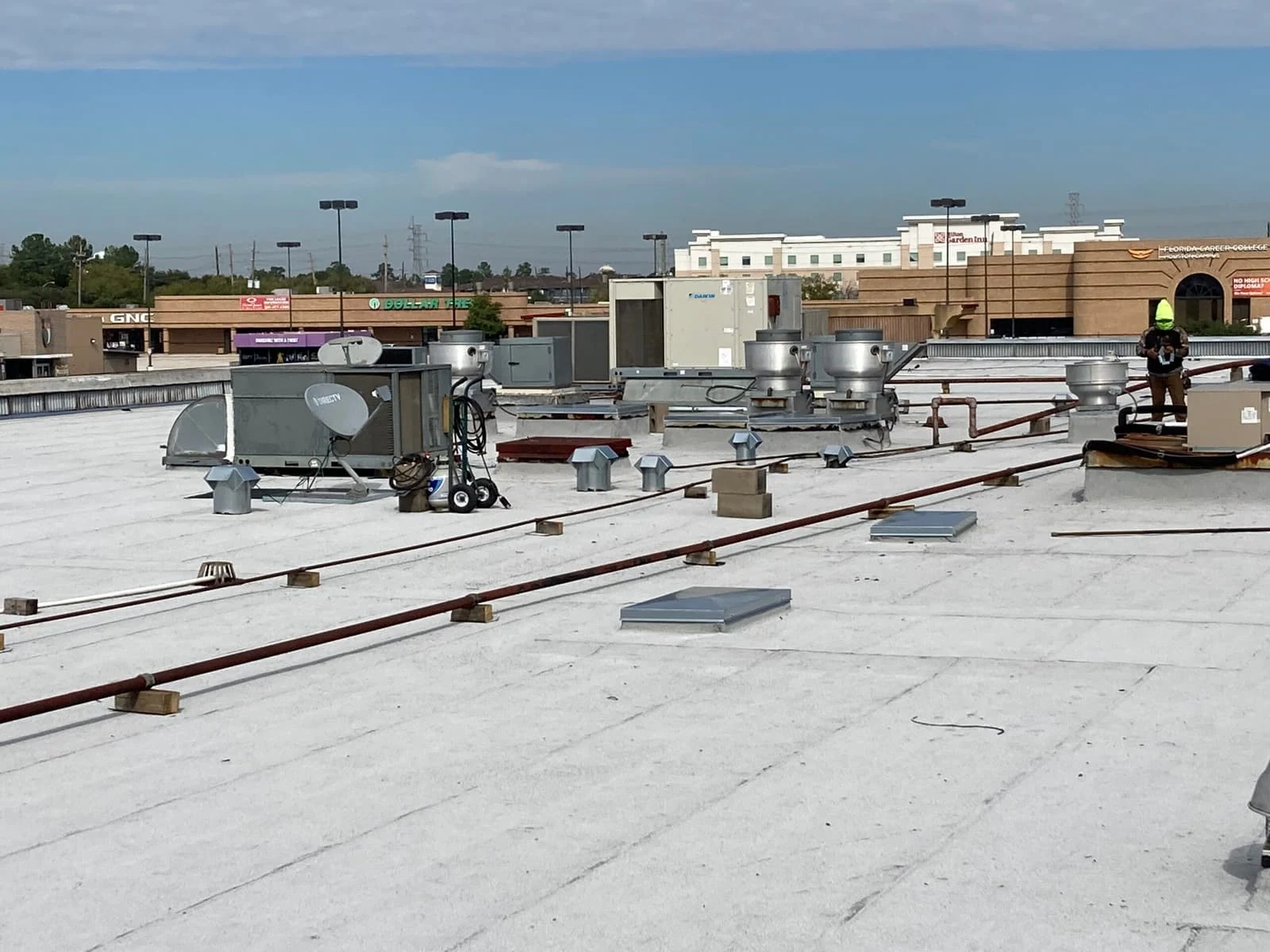
We photograph damage with reference points that establish location and scale, log any hail impact pattern against the storm date it corresponds to, and run moisture scans to map how far water has traveled from the point of entry. That level of detail matters because an adjuster comparing a claim against a specific storm event needs evidence that lines up with that date, not a general statement that the roof is damaged.
We separate storm-caused damage from pre-existing wear in every report. A roof with pre-existing seam deterioration that a storm then exploited is a different claim than one where wind uplift caused the failure outright, and blurring that distinction doesn't help the claim or the client.
Most policies require reasonable steps to prevent further damage after a storm, and we treat emergency tarping and temporary dry-in as the first call, not an afterthought. Getting a roof weathertight within hours of a storm limits interior damage and gives the adjuster a cleaner scope to evaluate rather than a roof that's been open to weather for days.
We log every emergency measure we take, what was tarped, when, and how, since that record often becomes part of the mitigation documentation the claim requires.
We also photograph the temporary repair itself once it's in place, since a tarp or temporary membrane patch that fails before permanent repair starts can raise questions about whether the mitigation was adequate. Documenting the condition of the temporary fix at installation gives everyone a reference point if weather tests it before the claim closes.
We walk the roof with an adjuster or independent estimator when asked, pointing to the specific damage locations and explaining the building science behind what caused each failure, why a corner zone lifted before the field membrane, why a hail strike bruised the membrane without puncturing it. That technical detail helps the scope conversation move faster than a general damage description would.
We document what we find and support that documentation with facts. We don't promise a specific claim outcome, because that decision sits with the carrier and the adjuster, not with us.
Where an owner brings in a public adjuster or independent estimator of their own, we're glad to walk the roof with them as well, and we provide the same documentation and technical explanation regardless of who's asking, since consistent facts are what hold up through a scope negotiation.
Emergency tarping and dry-in typically happen within hours of a call, since limiting further water intrusion matters more than a full inspection in the first day after a storm.
Yes, we document both separately in our reports, which keeps the claim focused on what the storm actually caused.
No. We document damage thoroughly and factually and support the adjuster's review, but the claim decision belongs to the carrier.
Yes, we're available to walk the roof with an adjuster or estimator and answer technical questions about the damage found.
That's common. Hail bruising often only shows up on a roof-level inspection, which is why we recommend a direct roof walk after any significant hail event rather than relying on a ground survey.