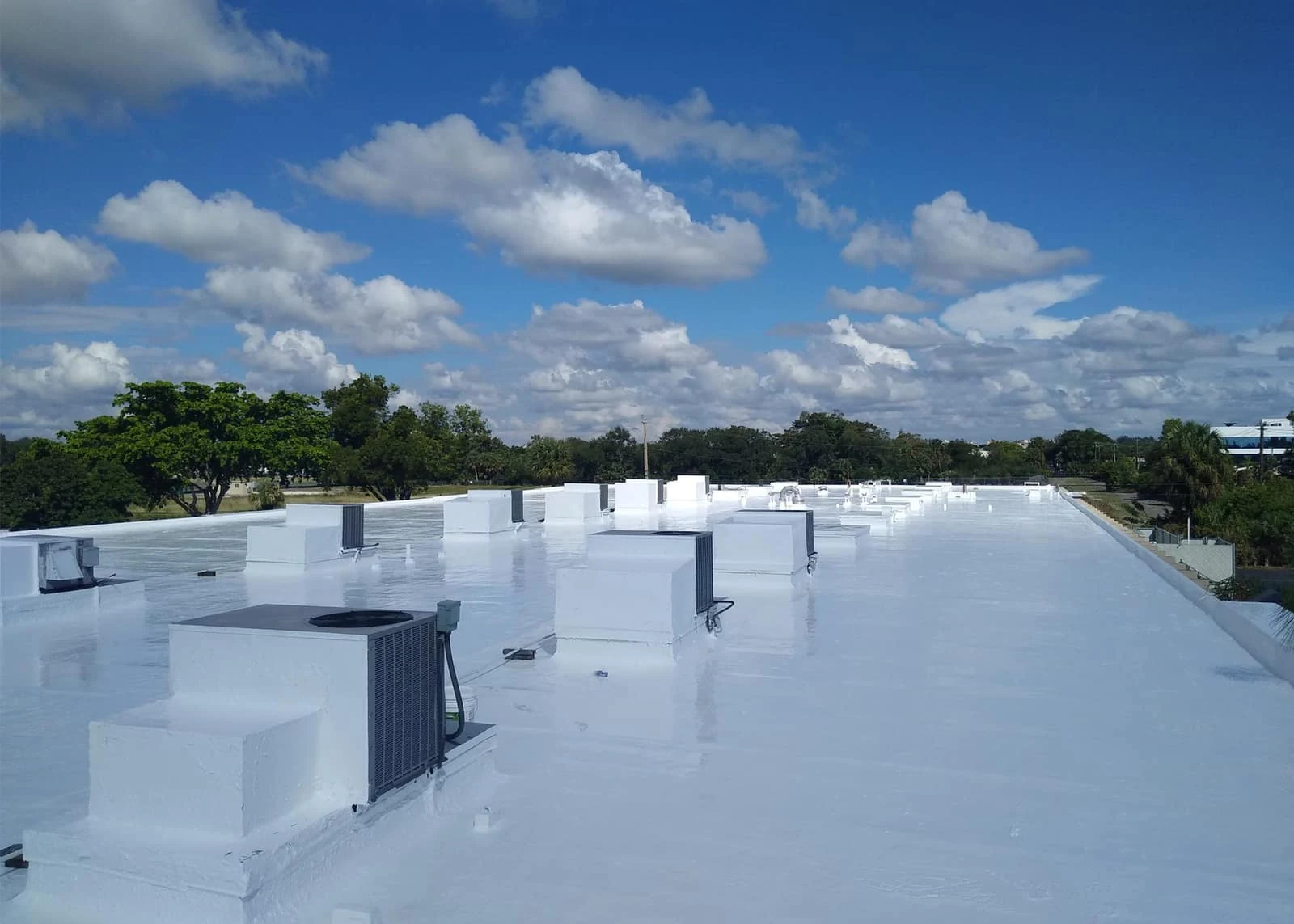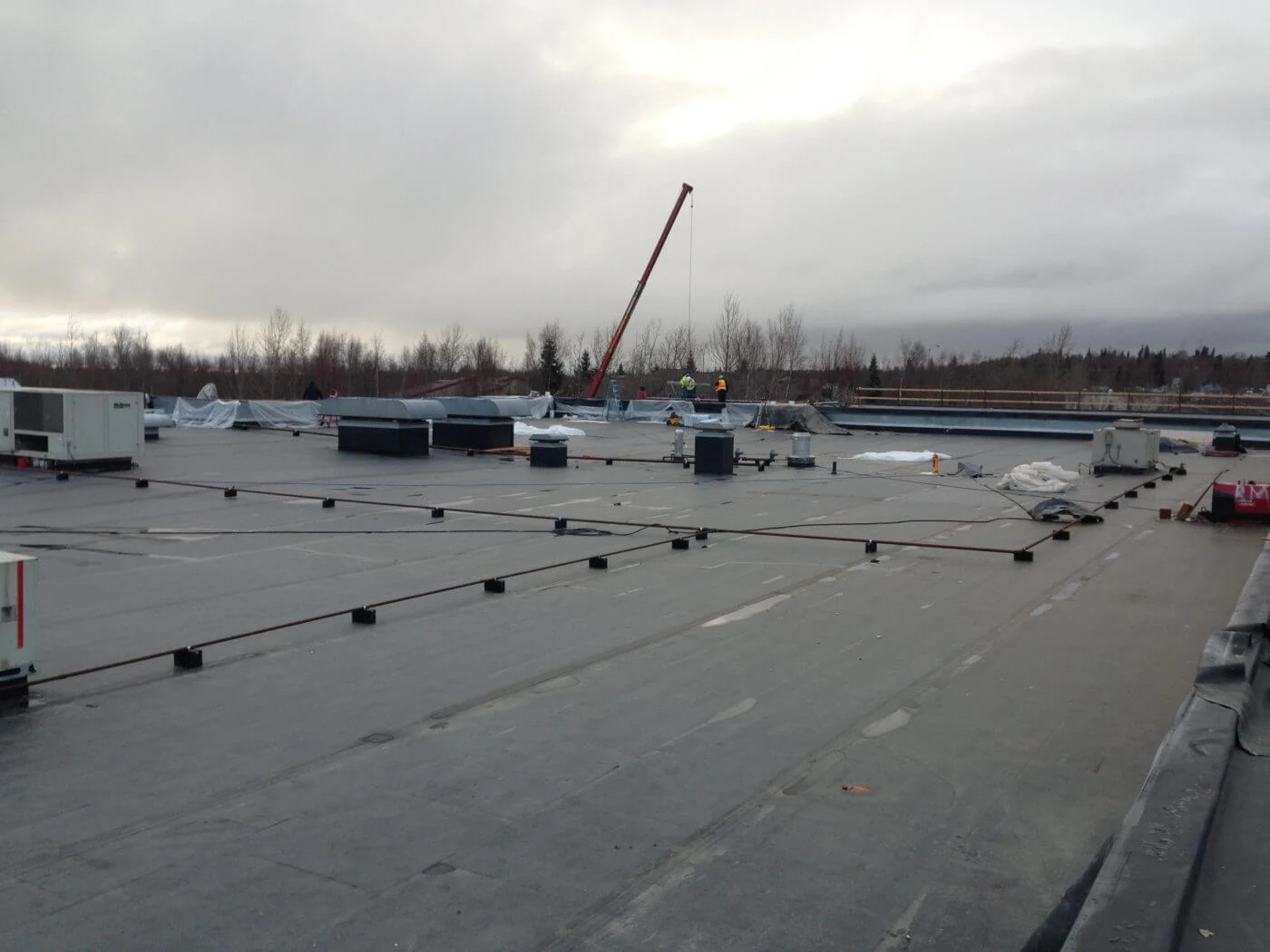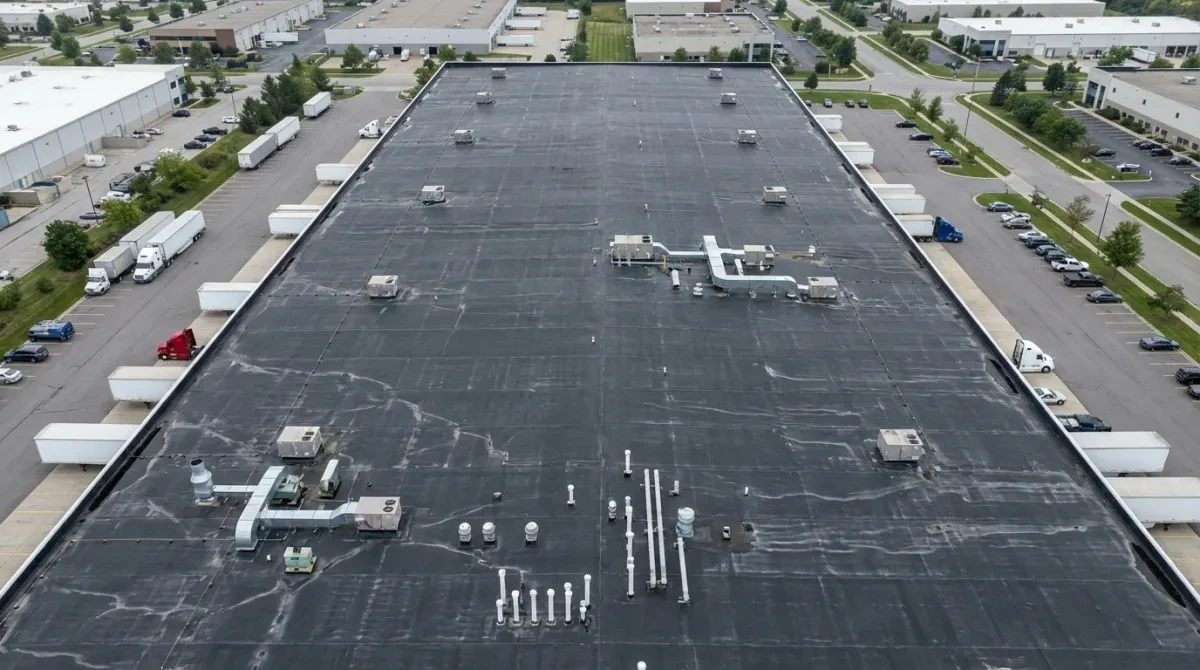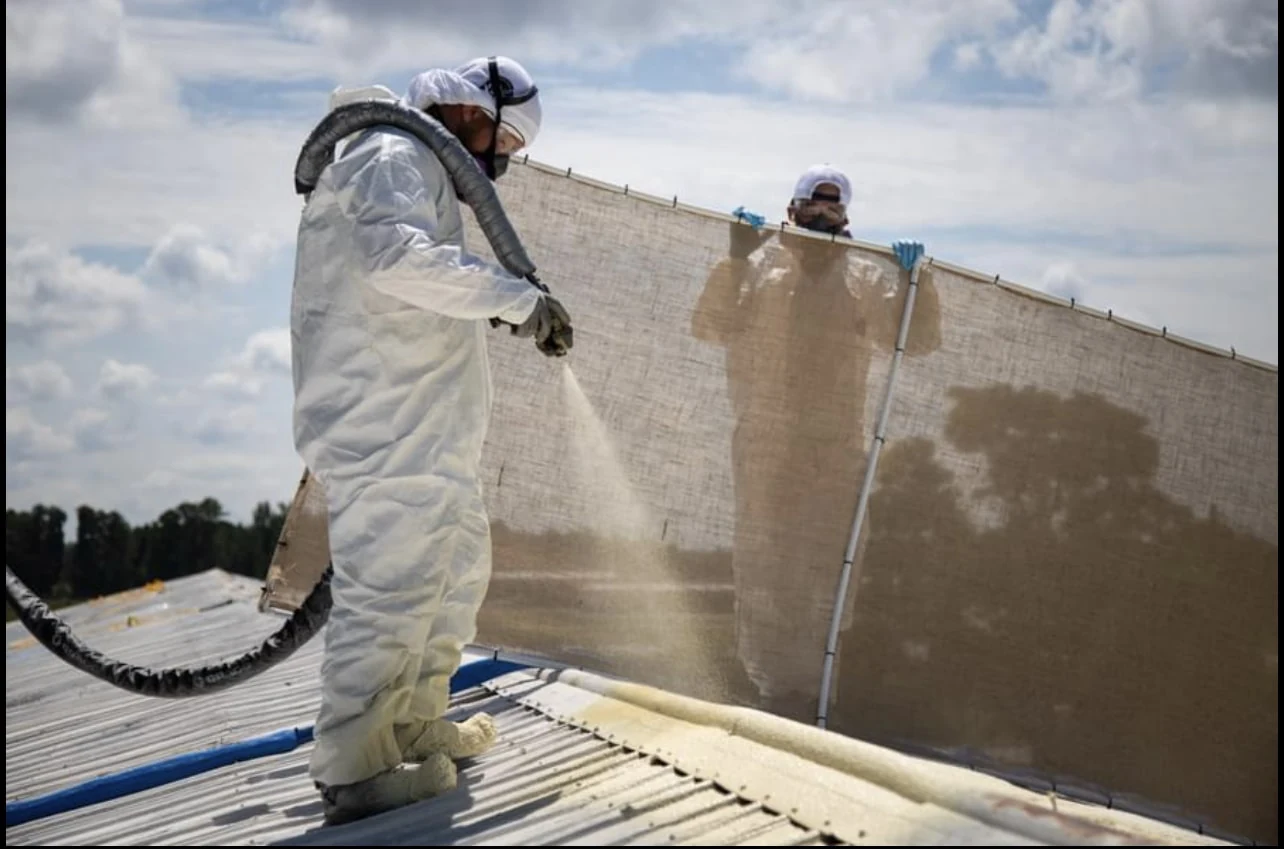
Black EPDM is a rubber membrane, not a thermoplastic, and it behaves differently than TPO or PVC through a Roanoke winter and a humid Blue Ridge summer. We still spec it regularly on buildings where its ballasted or fully adhered installation options, its long track record with adhesive-cured seams, and its flexibility at low temperature line up with the building's structure and the owner's priorities.
EPDM is a synthetic rubber compound, ethylene propylene diene monomer, and its defining property against a Roanoke Valley winter is that it stays flexible at low temperatures rather than stiffening the way some thermoplastics can in a hard freeze. That matters on a roof that crosses the freezing point repeatedly through a valley winter, the membrane can move with thermal contraction at a parapet or curb without the brittleness that shortens service life on other materials in the same cold cycling.
The tradeoff is seam technology. EPDM sheets bond with liquid adhesive or specialized tape rather than a hot-air weld, and that adhesive cure is sensitive to temperature and humidity during installation, our crews will not lay seam adhesive on a morning when valley fog has left the deck damp or when overnight temperatures haven't cleared the adhesive manufacturer's minimum application threshold.
EPDM offers an attachment option the thermoplastic membranes generally do not at this scale, ballasted installation, where stone or paver ballast holds the membrane in place through its own weight rather than fasteners or adhesive. Ballasted EPDM works on structurally sound decks with adequate load capacity, but it is not the right call for every site, a building close to a ridge crest or escarpment with a topographic wind speed-up factor under ASCE 7 needs a fastening or adhesion calculation that accounts for that added uplift pressure, and ballast alone may not be the answer there.
For buildings on open valley floor near I-81 warehousing where Exposure C wind pressures apply, we run the numbers on all three attachment methods, ballasted, mechanically attached, fully adhered, before recommending one. The deck's load capacity, the roof's proximity to elevated terrain, and the owner's rooftop-traffic pattern all factor into which attachment method actually performs.
The ring of ridges around the Roanoke Valley, Poor Mountain, Twelve O'Clock Knob, Read Mountain among them, sits well above the valley floor's roughly 950-foot elevation, and buildings closer to that higher ground see sharper day-to-night temperature swings than sheltered in-town sites. Adhesive-cured EPDM seams that were installed correctly hold up well to that cycling, but a seam with inadequate adhesive coverage or insufficient roller pressure at install is the weak point that freeze-thaw movement will find first.
We inspect and re-probe EPDM seams during scheduled maintenance visits specifically because seam failure on a rubber membrane roof rarely announces itself with a dramatic leak, it shows up first as a slow separation that widens with each thermal cycle, which is why a maintenance program matters more on an EPDM roof than owners sometimes expect.
Reflectivity has pushed white membranes to the front of most commercial specs, but black EPDM still earns its place on buildings where solar heat gain into the roof assembly is not the dominant concern, industrial buildings with significant internal heat load, roofs going over compatible insulation values already accounting for solar gain, or projects where the ballasted option's lower wind-uplift fastener penetration count is the priority.
We also see EPDM specified on recover projects where the existing roof assembly and insulation package were designed around a rubber membrane originally, staying with EPDM avoids compatibility questions between old and new insulation and membrane chemistry that a switch to a different membrane class can introduce.
An EPDM roof rewards a maintenance program more than a punch-list mentality. We check seam adhesion, flashing terminations at parapets and curbs, and ballast distribution on scheduled visits, catching a lifting seam edge before a freeze-thaw winter turns it into an active leak is far cheaper than emergency repair after the fact.
Owners who commit to twice-yearly inspection on an EPDM roof in this climate, once before winter and once after, get meaningfully more service life out of the membrane than a set-it-and-forget-it approach delivers, because the failure mode here is gradual seam separation, not sudden membrane rupture.
A dark membrane absorbs more solar heat than a white one, which can raise roof surface temperature and, depending on insulation and HVAC design, some portion of cooling load. We size that tradeoff against the building's interior heat sources and insulation package rather than assuming reflectivity is always the deciding factor.
EPDM's rubber chemistry stays flexible at low temperatures, which helps it move with contraction at flashings and curbs through repeated freezing. The seams are the more sensitive element, since they cure with adhesive rather than a hot-air weld, so seam quality control matters more on EPDM than membrane flexibility alone.
It depends on the site's topographic wind exposure. Buildings close to a ridge crest can pick up a wind speed-up factor under ASCE 7 that raises uplift pressure, and ballast alone may not address that adequately, we run the uplift numbers before recommending ballasted attachment on an elevated or ridge-adjacent site.
We recommend twice yearly, once heading into winter and once after, because EPDM seam failure tends to develop gradually rather than announce itself with a sudden leak. Catching a lifting seam early is far less costly than repairing active water intrusion after a freeze-thaw season.
When moisture cores confirm dry insulation and a sound deck, and the building hasn't reached the code limit on membrane layers, recover is often viable and keeps membrane and insulation chemistry consistent with the original assembly. We pull cores before making that recommendation.