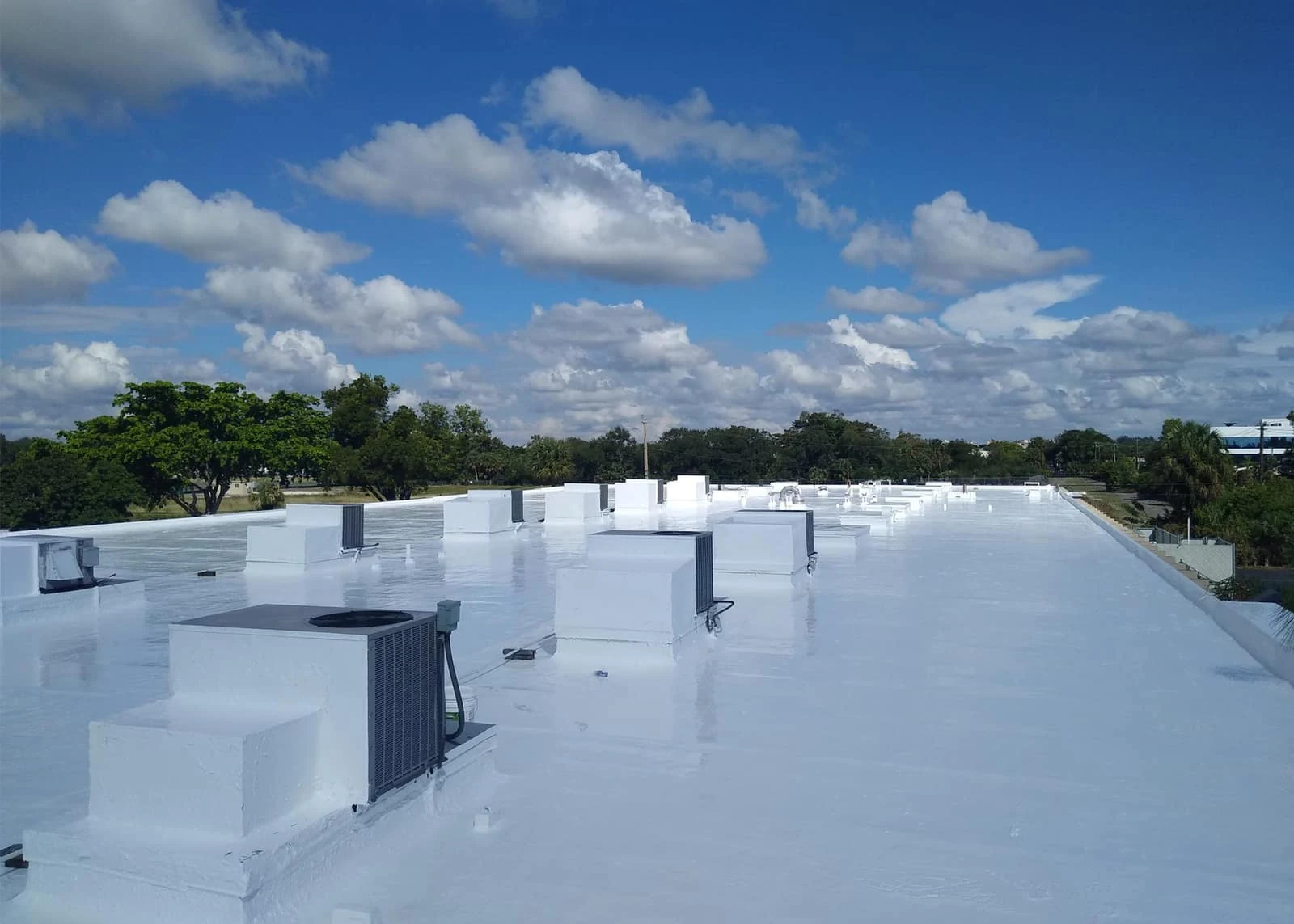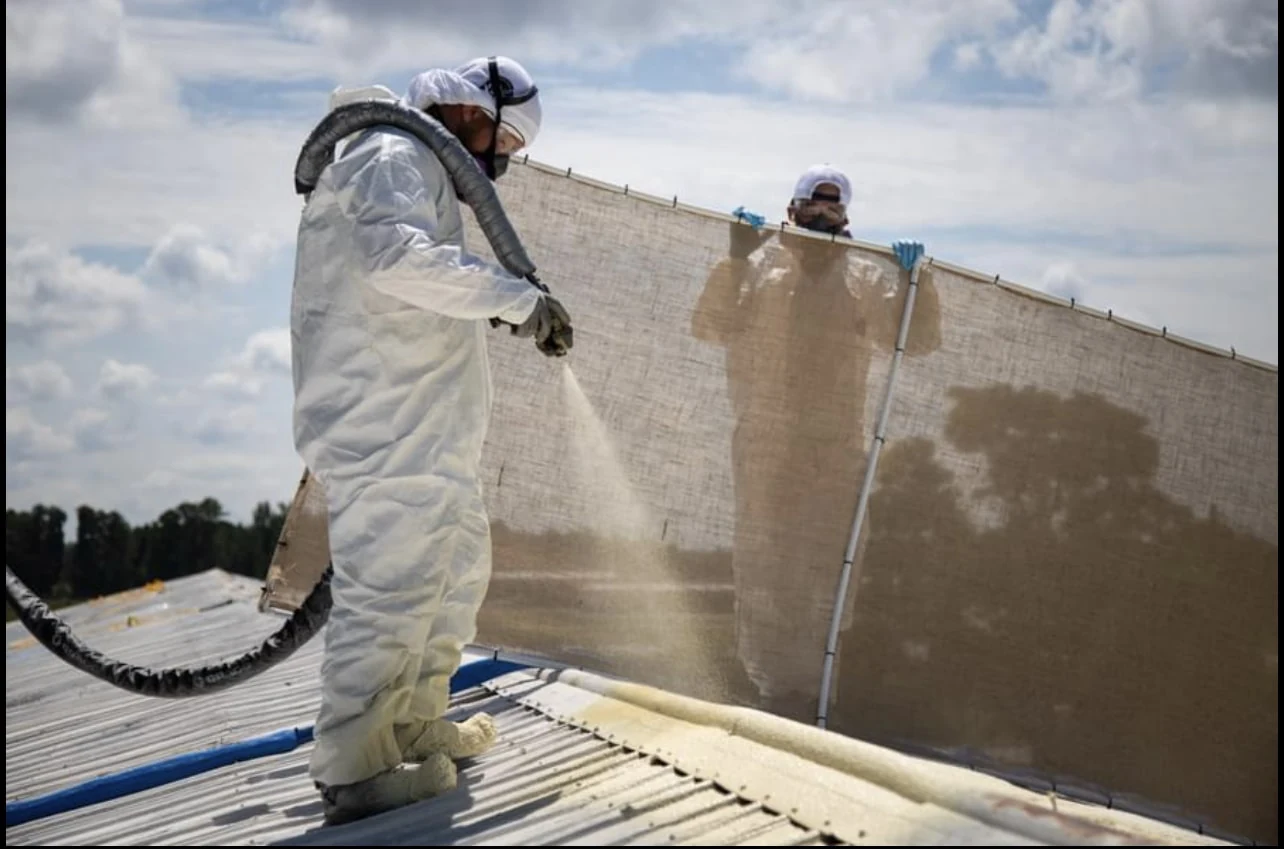
Spray polyurethane foam, SPF, is the one commercial roofing system that installs its own insulation and waterproofing membrane in a single continuous application, sprayed directly onto the substrate and self-flashed around penetrations. On Roanoke Valley buildings with irregular decks, numerous curbs and penetrations, or a need for added R-value without raising the roof height significantly, it solves problems a sheet membrane cannot address as cleanly.
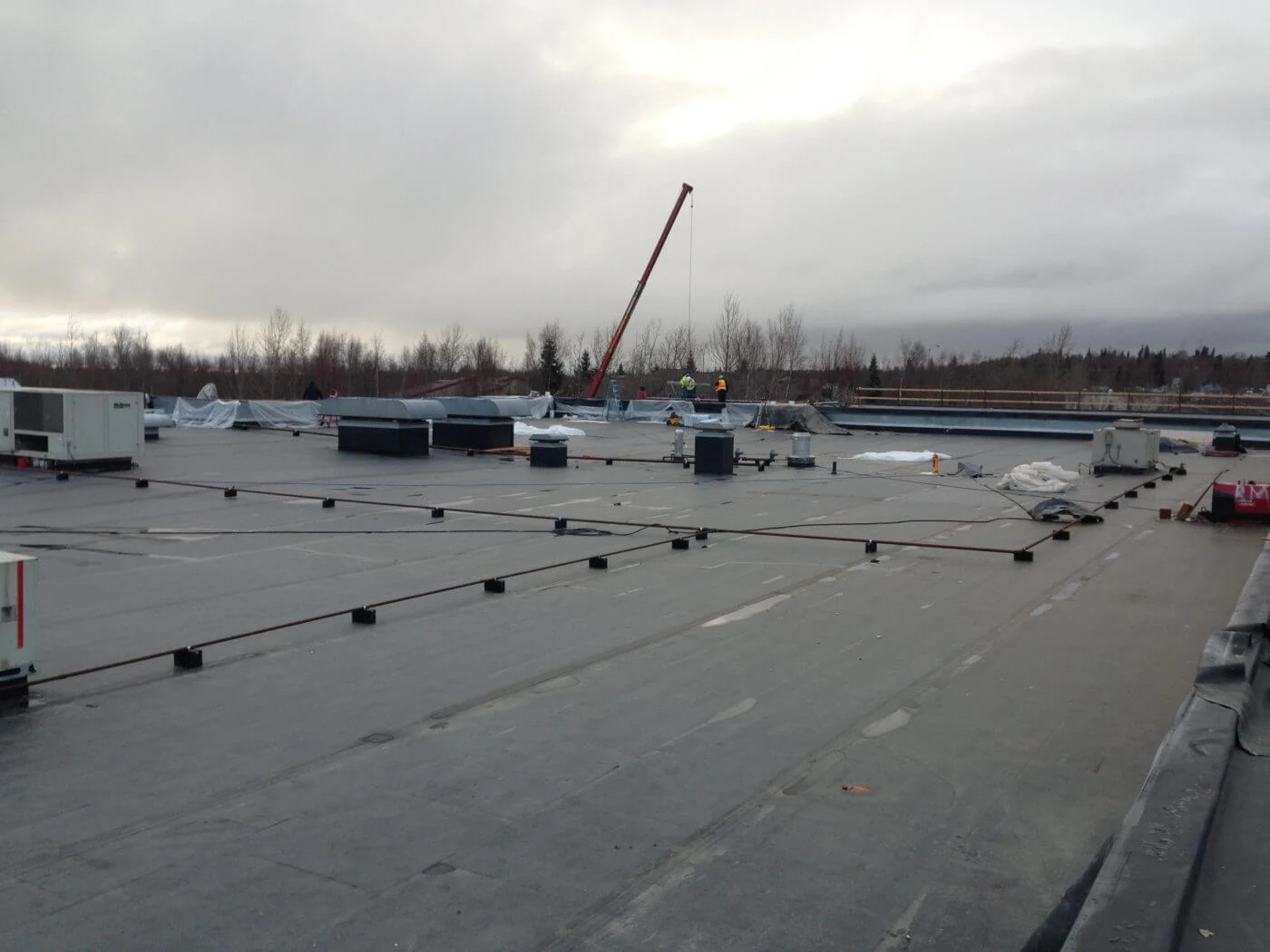
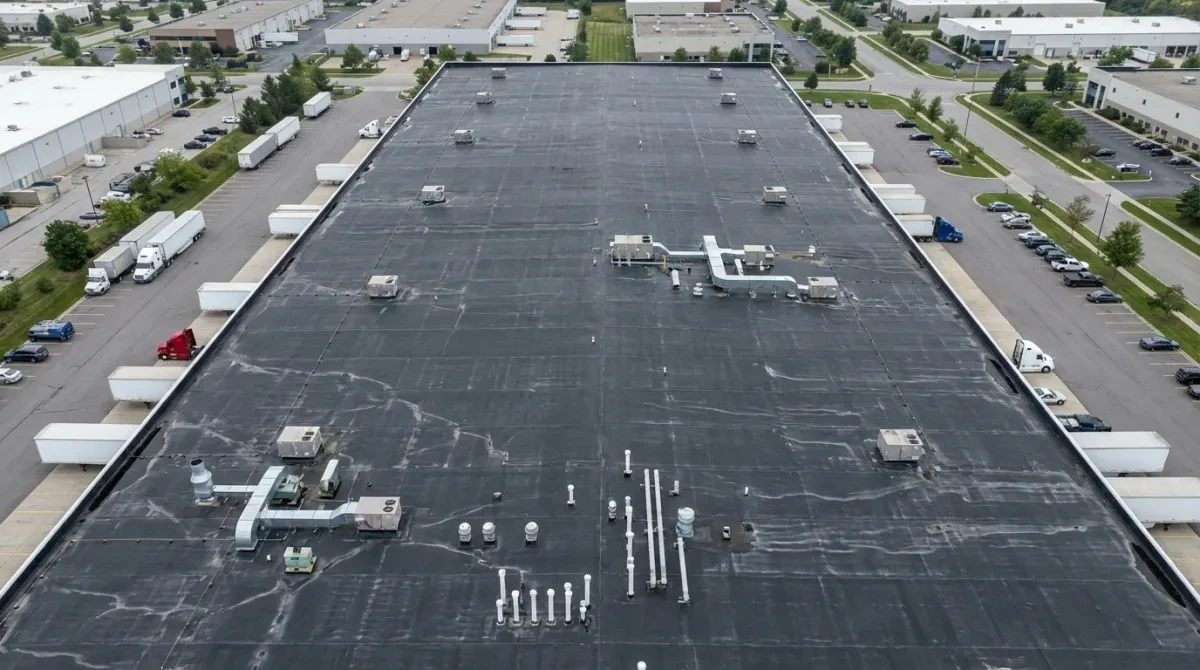
Because SPF is sprayed as a liquid that expands and cures in place, it flows around HVAC curbs, pipe penetrations, and irregular deck transitions without the cut-and-detail work a membrane roof requires at every one of those points. On a building with a dense rooftop mechanical layout, common on manufacturing and distribution facilities along the I-81 corridor, that self-flashing property eliminates dozens of potential leak points that a sheet-membrane installation would need individually detailed.
The tradeoff is that SPF requires a topcoat, typically acrylic or silicone, to protect the foam from UV degradation and mechanical damage, since the foam itself is not a finished, walkable wear surface on its own. We treat the foam and topcoat as one integrated system rather than two separate products, because the topcoat's condition determines the foam's actual service life.
SPF applies at a specified thickness to hit a target R-value, and because it goes down as a monolithic layer rather than rigid board stock, a contractor can taper it to correct drainage and build insulation value in the same pass, something that typically requires separate tapered-insulation boards on a membrane roof. For a Roanoke Valley building looking to improve thermal performance during a recover project, that combination of added R-value and corrected slope in one application is a real efficiency.
The added insulation value matters through both halves of this climate's swing, it reduces heat loss during the valley's frequent freeze-thaw winter cycling and reduces solar heat gain during humid, high-dew-point summer afternoons, giving SPF a year-round thermal performance case that a membrane-only recover does not offer on its own.
SPF application is highly sensitive to substrate temperature, dew point, and wind, spraying onto a damp deck or during a period when ambient conditions are near the dew point produces poor adhesion and can trap moisture in the foam, a defect that is difficult to detect until it causes a problem years later. Roanoke's humid subtropical summers and valley fog in low-lying areas narrow the application window on many days, so our crews monitor conditions closely and will not spray outside the manufacturer's specified parameters regardless of the project schedule.
That discipline is why SPF installation in this market often runs on a tighter seasonal and daily window than membrane roofing, and we build that reality into the project timeline up front rather than promising a schedule the weather cannot support.
SPF's wind resistance comes from its adhesion to the substrate across the entire roof area rather than a fastening pattern at discrete points, which gives it a fundamentally different uplift profile than a mechanically attached membrane. On buildings near a ridge crest or escarpment where a topographic wind speed-up factor under ASCE 7 raises design pressure, substrate preparation and primer selection become critical, foam that has not achieved full adhesion across the deck is vulnerable at the perimeter regardless of foam thickness.
We test adhesion during application and document substrate preparation for exactly this reason, an SPF roof's wind performance is only as good as the bond between the foam and what it is sprayed onto.
An SPF roof's long-term performance depends on the topcoat being recoated on a schedule before it wears through to bare foam, since exposed foam degrades quickly under direct UV and mechanical traffic. We inspect topcoat thickness and condition during scheduled visits and recommend a recoat cycle based on actual wear rather than a fixed calendar interval, because UV exposure and rooftop traffic vary building to building.
Bird activity and hail impact are two things we watch for specifically on SPF roofs in this market, foam can be more susceptible to puncture from sharp impact than a reinforced membrane, so we address topcoat and any foam damage promptly rather than letting small defects grow.
Yes, that is one of SPF's strongest use cases. Because it sprays as a liquid that self-flashes around curbs and penetrations, it eliminates many of the detail points that require individual attention on a sheet-membrane roof, which is valuable on manufacturing and distribution buildings with dense rooftop mechanical layouts.
The cured foam and topcoat perform well long-term, but the application itself is sensitive to humidity and dew point, our crews monitor conditions closely and will not spray outside manufacturer-specified parameters. That narrows the practical application window on many summer days in this market.
SPF's wind resistance comes from adhesion across the full substrate rather than a fastening pattern, so substrate preparation and primer selection matter more than they do on a mechanically attached membrane. On sites with a topographic wind speed-up factor, we test and document adhesion carefully before sign-off.
It depends on UV exposure and rooftop traffic rather than a fixed schedule, we inspect topcoat thickness and condition during scheduled visits and recommend recoating based on actual wear. Letting the topcoat wear through to bare foam shortens the roof's service life significantly.
Often yes, provided the existing substrate is dry, structurally sound, and properly prepared for adhesion. We test adhesion and confirm moisture conditions before recommending SPF recover, since poor bond to a damp or contaminated substrate is the most common cause of early SPF failure.