Winters in the Roanoke Valley are real winters - accumulating snow, hard freezes, and the freeze-thaw cycling that comes with a mountain climate where daytime melt and overnight refreeze can repeat for weeks at a stretch. That cycling is harder on a low-slope commercial roof than a single big snowfall usually is, because it stresses drains, flashing joints, and parapet details repeatedly rather than just once. When ice or snow damage leads to an insurance claim, the documentation needs to reflect that repeated stress rather than treating it as a single event.
Mountain terrain affects how snow melts and drains across the valley, and a roof with marginal drainage to begin with can end up holding water at low points that then freezes overnight. That ice adds weight and can work into flashing joints and coping seams as it expands, opening gaps that let water in once conditions warm again. We look for this pattern specifically on roofs with known drainage issues, since a winter storm often turns a slow, manageable leak risk into an active one.
Roanoke's older brick buildings - many dating to the rail era downtown, with roofs added or altered well after original construction - often have parapet and drain details that don't handle ice the way current designs do. Ice damming at these transitions can force water backward under the membrane at a joint that was never sealed with today's ice-resistant detailing in mind. We document ice damming separately from general snow load damage, since the repair approach and the underlying cause are usually different.
Sustained accumulation adds real weight to a flat or low-slope roof, and older membrane or deck systems built to an earlier code cycle may not have the same load margin as current construction. We check for signs of deck deflection or membrane stress at drains and low points after heavy snow, since sustained load damage doesn't always look dramatic right after the event - it shows up gradually as fastening loosens or the membrane develops stress cracking at load-concentrated spots.
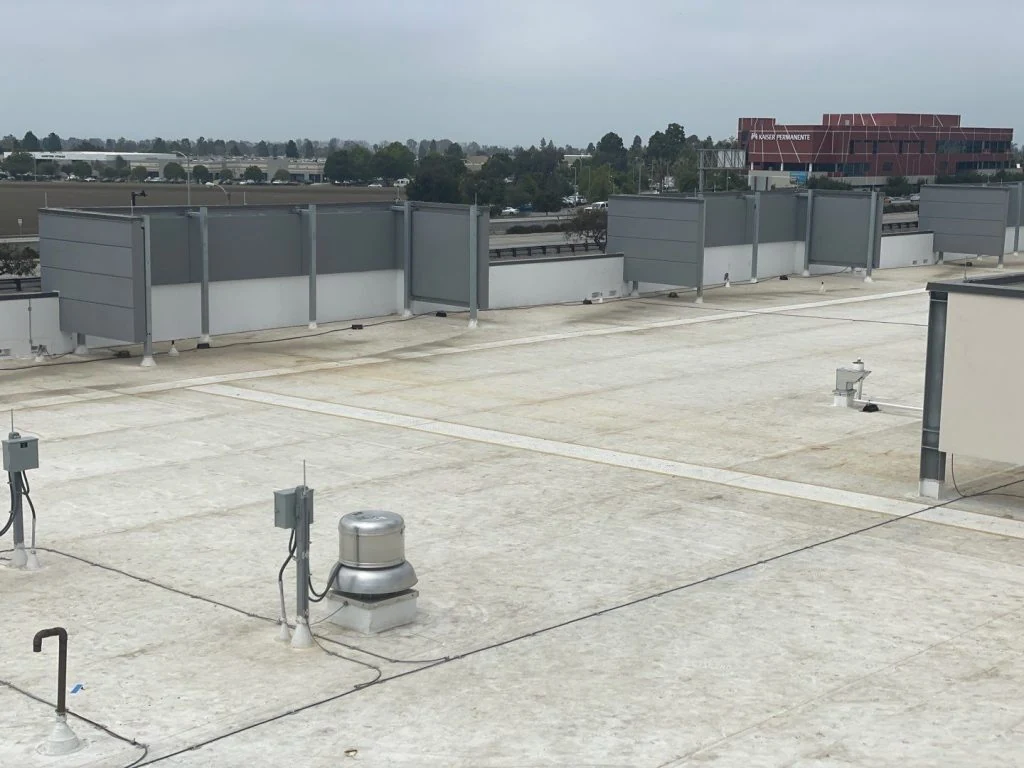
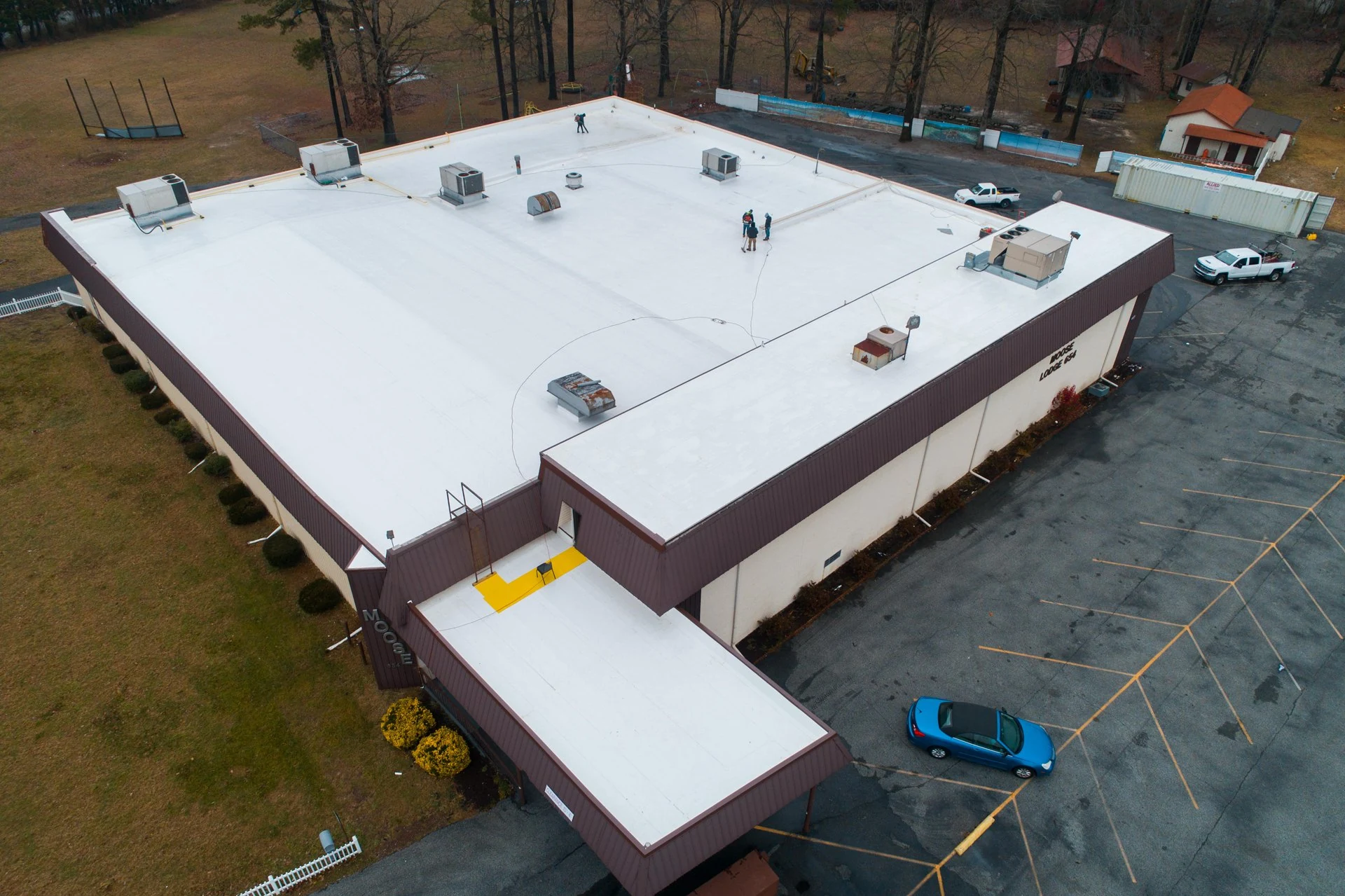
A distribution building's roof along I-81 covers enough area that snow doesn't clear or melt evenly across it. Drifting against rooftop units and parapets can pile snow considerably deeper in some zones than others, and those drifted areas carry load well beyond what the average accumulation across the roof would suggest. When we inspect a large distribution roof after a heavy winter storm, we look specifically at drift zones near equipment and edges rather than assuming a single accumulation figure applies uniformly across the whole field.
Carilion's medical buildings and other facilities running continuous operations can't have a section of roof sit open during a repair the way a vacant warehouse might tolerate. Winter storm damage on these roofs needs documentation and a repair plan that accounts for phased work over active space below, which affects how we sequence the inspection and how the repair scope gets written up for a claim.
We're your roofing contractor, not a public adjuster - we document and substantiate the ice and snow damage so you and your adjuster work from an accurate scope. That means photos of ice damming locations, moisture readings where water has tracked under the membrane, and a written report distinguishing storm-related damage from ongoing drainage issues that predate the winter event, since carriers evaluate those differently.
Timing matters here more than it does with a single wind or hail event. A carrier reviewing a winter claim wants to know when the damage occurred relative to a specific storm or cold snap, and that's harder to pin down with cycling damage than with a discrete event. We keep dated photo records across a winter where possible, particularly on roofs we've inspected before, so the timeline supporting a claim holds up to scrutiny rather than relying on a single post-thaw walk to reconstruct what happened over several weeks.
It depends on your policy and whether the damage is tied to a covered weather event versus a pre-existing drainage problem. We document the specific cause so your carrier can evaluate it against your policy terms.
Freeze-thaw cycling stresses a roof repeatedly over weeks rather than in one event, which can make it harder to date precisely. We document the pattern and likely timeframe as clearly as the evidence allows.
Yes, though it typically requires phased work planned around occupied space below. We build that sequencing into the repair scope from the start.
We compare against prior inspection records where they exist and look at how fresh the damage appears versus areas showing longer-term wear, then document our reasoning explicitly.
Yes. We're available to walk the roof with an adjuster for any weather-related claim and explain what we found directly.